



Welcome to Let’s Get Lost! I’m Rebecca, a recipe developer, food photographer, passionate people watcher, and chaser of new experiences. You might know me from my recipe websites, Of Batter and Dough and A Little and A Lot.
My husband and I are nomads without a home base but with many modes of transportation, namely an RV, a motorcycle, and a sailboat. I write recipes and stories for curious people who believe experiences are more important than things and who want more adventure.
Get every issue and recipe directly on rebeccablackwell.com.
This issue is a reheat
If you’ve ever listened to the podcast The Sporkful, you know that when they re-release an episode, they call it a “Reheat”. I love this and am stealing it. :-)
I’ll be on vacation in Europe through must of April and so am re-publishing a few of the most popular past issues while I’m away.
This issue was originally published in June of 2024. It contains a lot of my favorite recipes, ones you may have missed if you subscribed at some point after then. I hope you enjoy!
From the local saloon to the grocery store, this is Small Town, USA


We’ve spent the past two weeks in Reed Point, Montana, a quirky small town with a population of 96. The heart of the town is the Waterhole Saloon, where you can show up on any night of the week for a drink and a burger, and plenty of local color.
One of the things that drew us to RV life is the promise of experiencing what it’s like to live in different parts of the country. This is easier said than done because while we actually do live in every new location (eat, sleep, work, and all the necessary tasks that come with normal life), we are still visitors.
So, the Waterhole Saloon is exactly the kind of place we love to find in small towns because it offers an authentic experience of the local culture. We sit ourselves at the bar and try to gather a sense of what it means to belong in this little corner of the world.
We spent 4 evenings at The Waterhole Saloon during our two weeks in Reed Point and my sense of the town is this: The only rules here are the unwritten ones that, when abided by, will grant you access to Mayberry-like small town hospitality and when crossed, will get you run out of town faster than a speeding bullet (which you might have to be).
Here’s the other thing about Reed Point: We have been to small towns that are the kind of places you get stuck in. The feeling is that the people living there are not there because they want to be. They are there because they haven’t been able to figure out how to get out. That’s not Reed Point.
The people in Reed Point live here because they choose to - many of them moved here from elsewhere because they fell in love with the place - and you can feel that from the moment you step foot inside this clean, cared for small town.
The other place that never fails to provide a taste of local color is the grocery store. Even in touristy locations, grocery stores are filled with local people just living their lives. From the employees who work there to the neighbors who shop there, local grocery stores are an immersion into the energy of a town.
Some of them make me want to settle in and get to know the place and others make me anxious to leave. Both experiences are insightful in their own way.
I have also come across some of the most, shall we say, unique people in grocery stores… such as the grown man happily pushing his cart around the grocery store while wearing a Superman cape, and the man in a full Spiderman costume perched atop the grocery store sign as I turned into the parking lot. And no, it wasn’t Halloween.
Or the checker who gave me an uninterrupted NPR-style monologue of current events while scanning my groceries, and the checker who held up the line for several minutes so he could marvel at a package of mushrooms in my cart and finally exclaiming, “It’s been a long time since we’ve had a new kind of mushroom around here.”
Or the somewhat embarrassing experience of the checker calling her coworkers over to gawk at “the biggest order they’ve every seen” after ringing up my $300 worth of groceries.
Also, the items on the shelves of a store is a window into the town. There’s a store in Crystal Beach, Texas called The Big Store that is not very big in size but has a tiny selection of literally everything. I shopped at a grocery store in Wisconsin with three full isles devoted to frozen pizza and a store in South Dakota with an impressively large meat selection and a produce section not much bigger than my refrigerator. I shopped at a store in Oregon with an ice cream counter and nearly every single person shopping there was pushing their cart with one hand and holding an ice cream cone with the other.
I have also shopped in stores where the end caps are filled with locally made jam and jelly rather than big brands who paid the highest stocking fee. And I’ve stuffed my refrigerator and freezer with meat and produce from local farm stands sold by people who know what real food is.
Over the past 4 years, Steve and I have had many conversations that go something like this, “We would have never discovered this place if we didn’t live in an RV.” And that, more than anything, describes why we do it.
Friends from Louisiana that we met in Wisconsin and who visited us in Montana
The beautiful happy people sitting on my living room sofa in the photo above are Jack and Marsha. They are from Louisiana, but we met them two years ago in Wisconsin.
They were two campsites down from us and in between them and us was a little girl, Sophie, camping with her aunt and uncle. Sophie is going to grow up to be the kind of person who is friends with everyone in the entire world.
From the moment we pulled into our campsite, Sophie was a part of our lives and before I knew it I was taking her and her friend out kayaking, sitting around the campfire with her aunt and uncle, and accepting fresh vegetables and homemade wine from her mother’s garden.
One morning, I heard a knock on our door and opened it to find Jack and Marsha, who had, of course, also met Sophie. Marsha (who is basically the exact same person as Sophie) makes pot holders while her and Jack travel around the country (“making pot holders has saved our marriage” - her words, not mine 😂). After introducing themselves and explaining that Sophie told them all about us, she gifted me a couple of pot holders and just like that, they became lifelong friends.
We enjoyed getting to know them so much that we visited them the next year in their home town in Louisiana. And, upon discovering that our campground in Reed Point was on the way to their summer destination in Alaska, they parked themselves next to us for two nights and it was such a treat to have them as neighbors.
In the morning, I looked out my kitchen window to see a “good morning” sign hung in their window and now that sign is on permanent display in my kitchen. Also, Marsha is a photographer with a photographer’s eye and some of the photos above are stolen from her. ❤️

Poblano corn chowder
The Colorado town that I grew up and that we raised our children in is surrounded by farmland. In the summer months, visits to local farmers markets, with their overflowing baskets of fresh picked produce, were an exercise in restraint.
I wanted to take home armfuls (and sometimes did) of everything there. But, two of the things I looked forward to the most were the sweet corn and fresh chilies. In late summer, barrels of roasting chilies would blanket the entire town with a smell that I will forever associate with late summer.
All that to say, this chowder is the perfect thing to make when you have access to fresh summer corn and peppers. But, it’s also delicious with frozen corn and caned green chilies, so there’s absolutely no reason to deprive yourself.
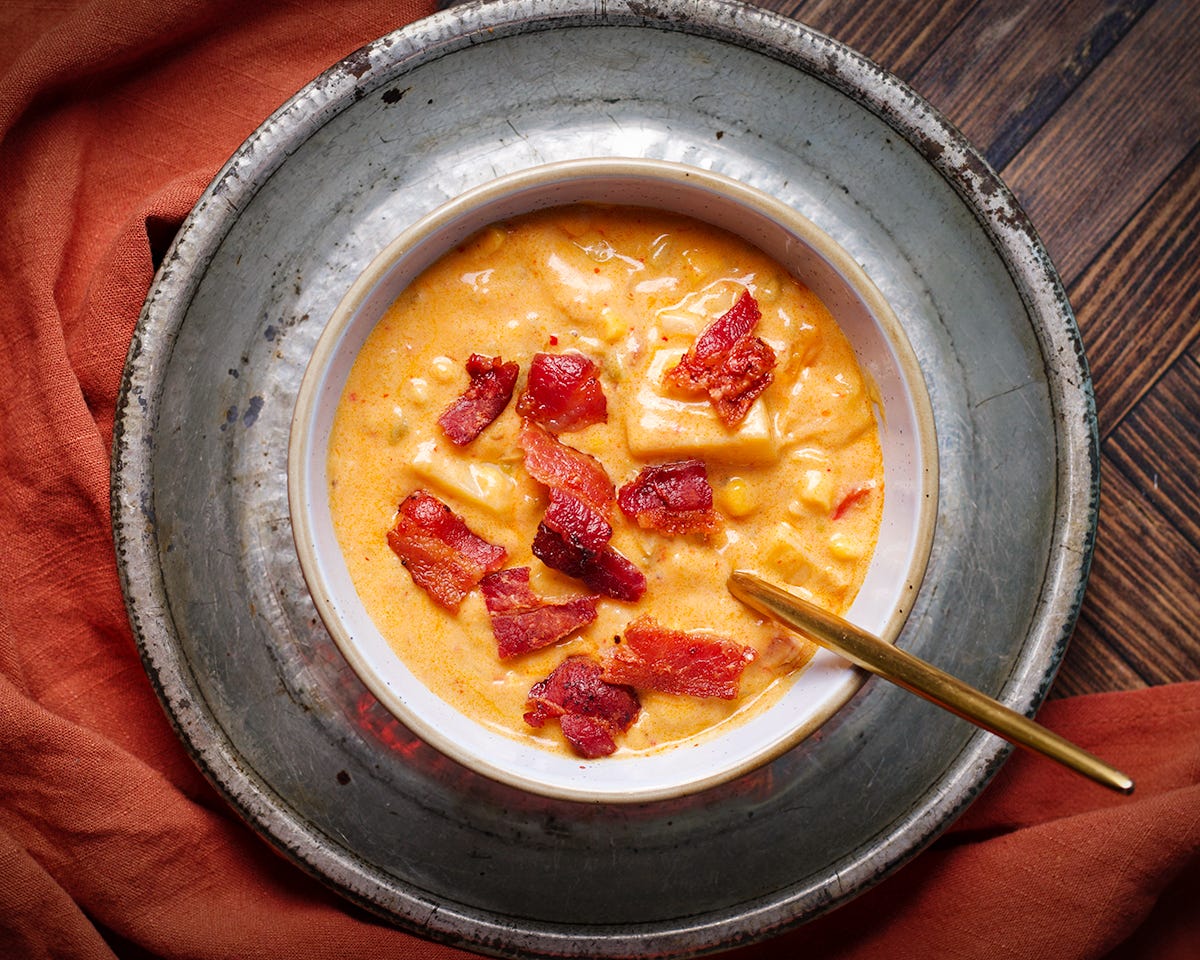
6 large Poblano peppers - roasted, peeled, seeded and coarsely chopped (About 1 1/2 cups) *If you can’t find poblano peppers, or don’t want to bother roasting, peeling, and chopping them, use canned chopped green chilies instead.
1 pound thick cut bacon - cut into bite size pieces that are about 1-inch long
2 tablespoons butter (I used salted butter)
1 large onion - peeled and diced
2 red bell peppers - stem and seeds removed and diced
6 cloves garlic - peeled and diced
1 - 3 teaspoons chili powder or Aleppo pepper (*to taste, depending on how spicy you want your chowder to be)
1 teaspoon ground cumin
1/2 cup all-purpose flour
6 cups chicken broth or vegetable broth (I used Better Than Bouillon Vegetable Base mixed with water)
1 1/2 pounds Yukon Gold potatoes - scrubbed, peeled, and cut into 1 or 2-inch cubes
8 ounces cream cheese, cut into chunks
12-ounces corn kernels (1 1/2 - 2 cups) - freshly cut from the cob or frozen
2 cups (about 8 ounces) shredded smoked Gouda cheese (good alternatives: Provolone, Monterey Jack, Fontina, and Muenster).
Salt and freshly ground black pepper, to taste
Roast the poblanos: Place peppers on a rimmed aluminum foil-lined baking sheet. Set a rack in your oven so that it’s about 8-inches away from the broiler and heat the broiler to high. Place the peppers in the oven and broil until they are are almost entirely black, approximately 8-10 minutes. Use metal tongs to turn the peppers over and cook until they are blackened on the other side. Remove the pan from the oven and cover with another sheet of aluminum foil or another rimmed baking sheet. Let sit for 10-15 minutes then peel the peppers and and remove the stem and seeds. Chop and set aside.
Add about a tablespoon of oil to a dutch oven or large stock pot and set it over medium heat. Add the pieces of bacon and cook, stirring frequently, until crispy. Use a slotted spoon to remove the bacon from the pan to a paper towel lined plate. Pour the bacon fat into a bowl.
Add 4 tablespoons of the bacon fat back to the stock pot and add the butter. Add the chopped onion and bell pepper and set the pan over medium heat. Cook stirring frequently, until the vegetables are soft, about 5 minutes. Add the chopped garlic, chili powder, cumin, and 1/4 teaspoon each of salt and ground black pepper. Cook, stirring constantly, for 1 minute more.
Add the flour all at once and cook, stirring constantly, for 2 minutes. Very slowly, pour in the chicken or vegetable broth, stirring constantly as you add it to prevent lumps from forming. Add the potatoes and bring the liquid to a boil. Reduce heat to medium and cook at a gentle simmer until the potatoes are tender.
Add the cream cheese and stir until it’s melted into the soup. Add the peppers (or green chilies) and the corn and bring back to a simmer. Add the cheese in small handfuls, stirring until it’s melted before adding more.
Stir in half of the bacon. Taste and season with salt and ground black pepper.
Serve in bowls, garnished with the rest of the crispy bacon.
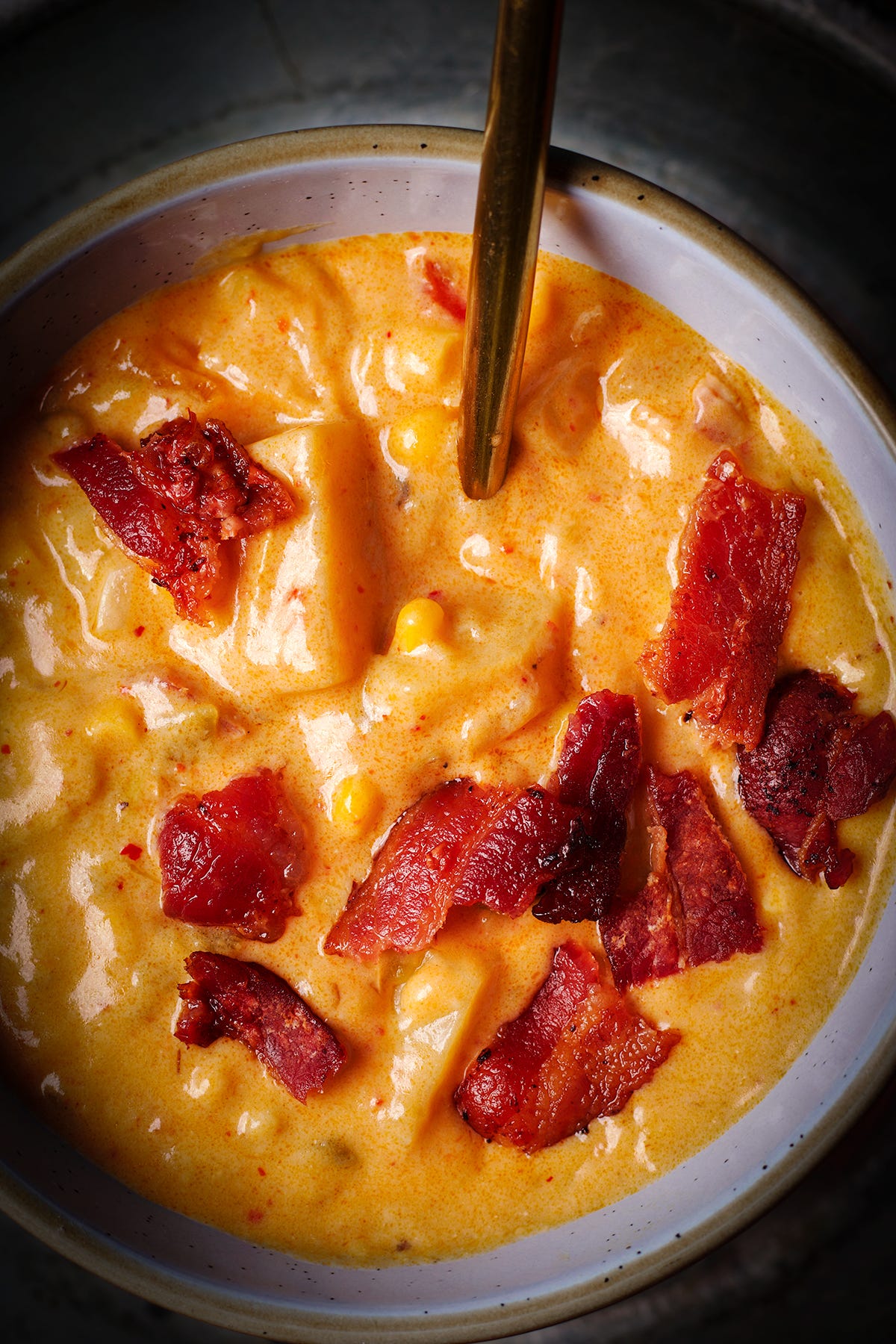
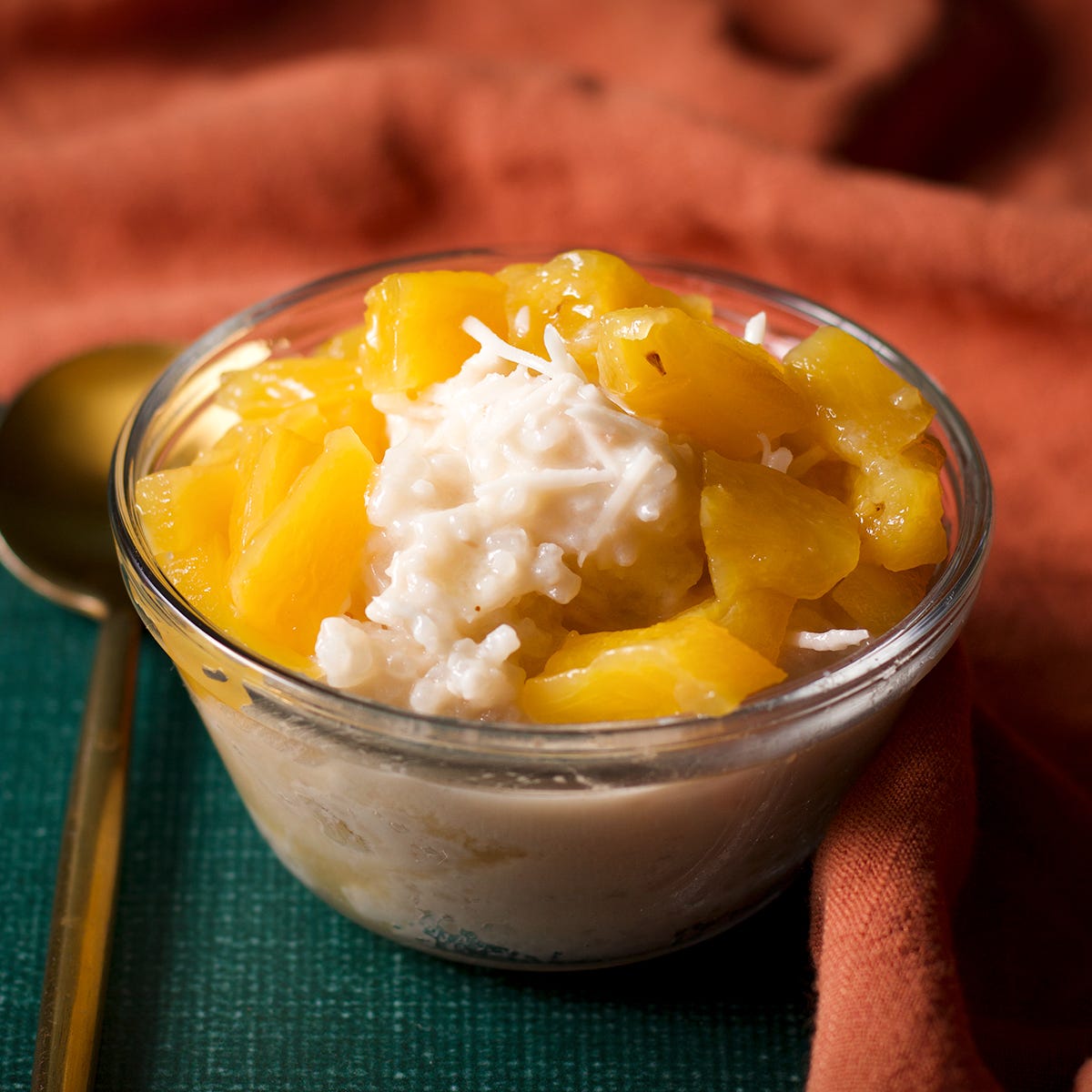
Coconut Pineapple Rice Pudding
My three favorite ways to use up leftover rice are Costa Rican beans and rice, Blackstone fried rice, and THIS coconut rice pudding. In fact, whenever I make rice, I almost always make extra just so I’ll have some leftover for one, or all three, of these dishes.
This recipe calls for 2 cups cooked white rice. I usually use Jasmine rice, but any medium or long grain rice will do.
If you want to cook the rice fresh just for this pudding, rinse 3/4 cup medium or long grain rice in water until the water runs clear. Add the rice to a saucepan along with 1 1/4 cups of water and bring it to a boil over medium-high heat. Cover the pan, reduce the temperature to low, and let the rice cook for 15 minutes, or until all the water has been absorbed. Spread the rice out onto a plate to let it cool and then proceed with the recipe.
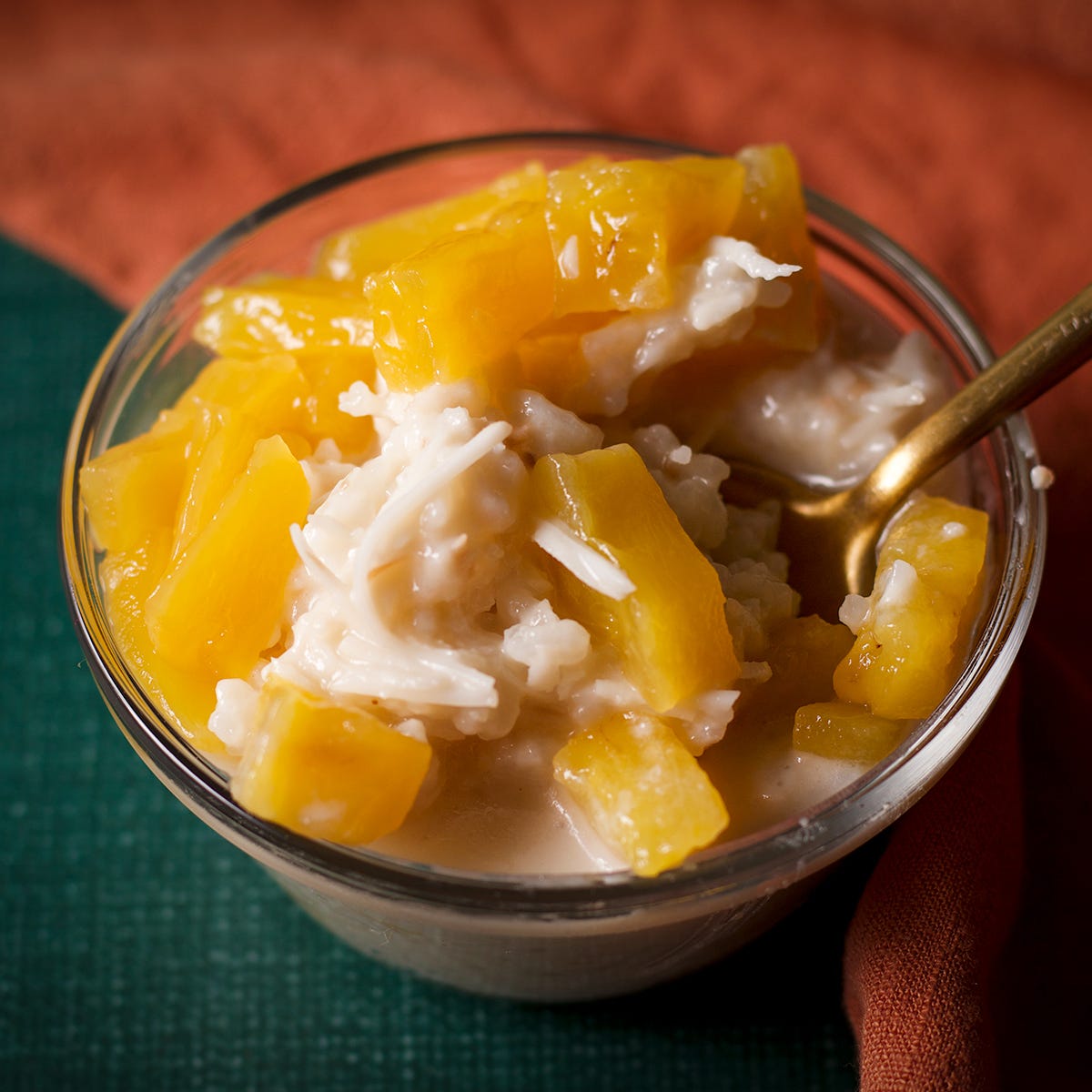
A quick note about coconut milk: In most supermarkets, you'll find both canned coconut milk and cartons of refrigerated coconut milk. The main difference between the two is how much water the coconut milk contains. Cartons of refrigerated coconut milk are much more diluted than what you'll find in the can.
In this recipe it's important to use full fat coconut milk that comes in a can. Typically, you'll find canned coconut milk in the Asian foods section of your supermarket. You can also order coconut milk online.
3 tablespoons honey
16 ounces fresh pineapple, cut into 1/2-inch chunks (about 3 cups)
3/4 teaspoon salt, divided
1 tablespoon lemon juice
1/2 cup sweetened shredded coconut
14 ounces full-fat coconut milk from a can
2 tablespoons white granulated sugar
1 tablespoon pure vanilla extract or vanilla bean paste
2 cups cooked rice that’s been allowed to cool completely (this is a great way to use up leftover rice)
Add the honey to a non-stick skillet and cook without stirring for 2 minutes. It will bubble and start to smell a bit like caramel. Add the pineapple, 3/4 cup water and about 1/4 teaspoon of salt. Bring to a simmer, cover, reduce the heat to medium low, and cook, stirring every once in a while, until the fruit is very tender and the moisture has evaporated. This will take about 20 minutes. Remove from the heat and stir in the lemon juice.
In a medium saucepan over medium heat, toast the coconut until about half of it is golden brown. Stir in the coconut milk, sugar, vanilla, and 1/2 teaspoon of salt. Bring to a simmer, then reduce the heat to maintain a gentle simmer and cook, stirring frequently, until slightly thickened - about 5 minutes.
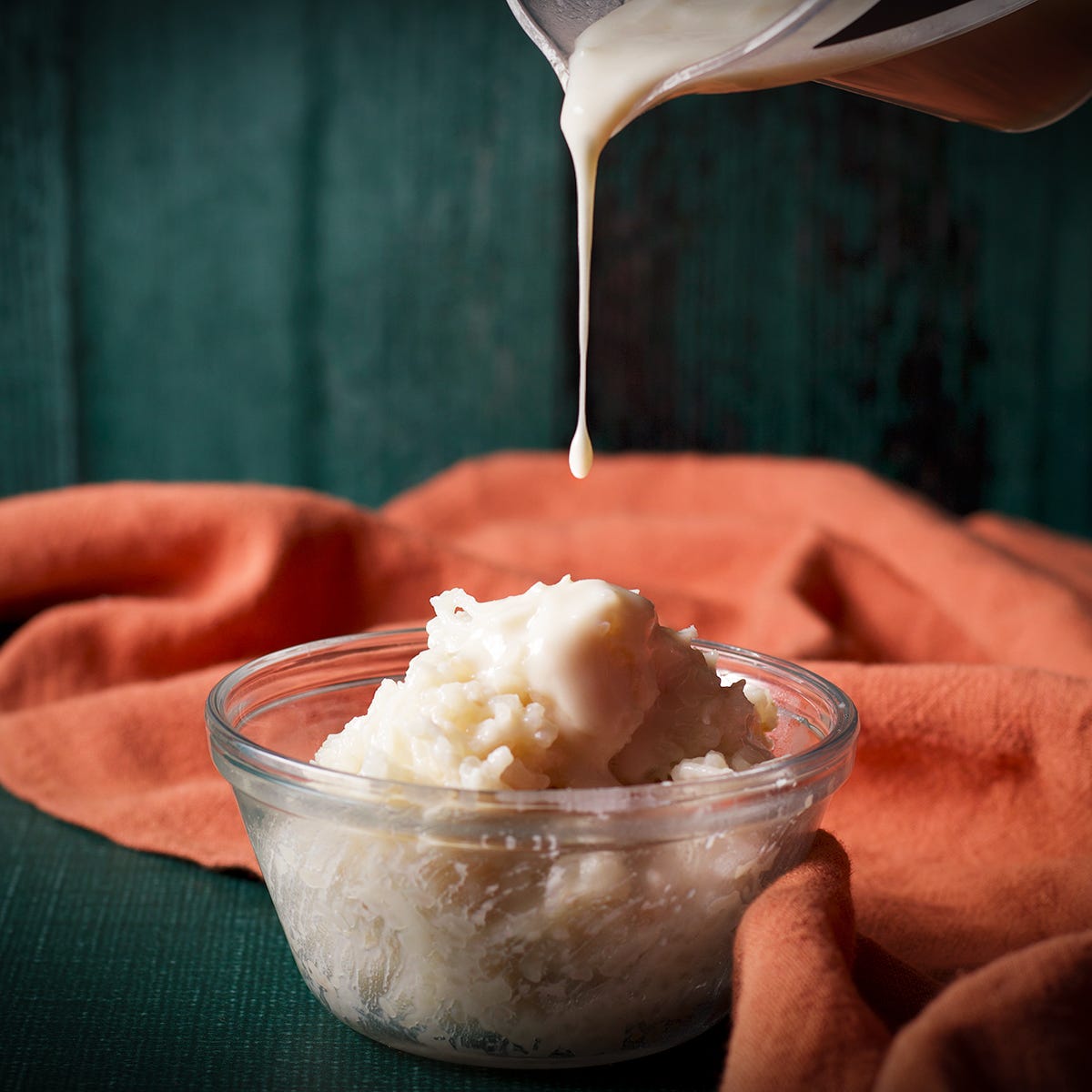
Remove 1/2 cup of the coconut mixture to a measuring cup with a spout and set aside. Add the rice and 1 cup of water. Cook, stirring frequently, until the liquid is absorbed and the rice is creamy. This will take about 15 minutes.
Allow the rice pudding to cool in the pan for 10 - 15 minutes. Serve warm in bowls drizzled with the reserved coconut mixture and topped with the pineapple.

Pepper jack potatoes
In the last issue, I wrote about one of my most treasured gifts - a recipe book of my Grandma’s favorite recipes. In that issue, I shared her recipe for Denver Chocolate Cake. (And if you haven’t made it yet, what are you even doing with your summer?)
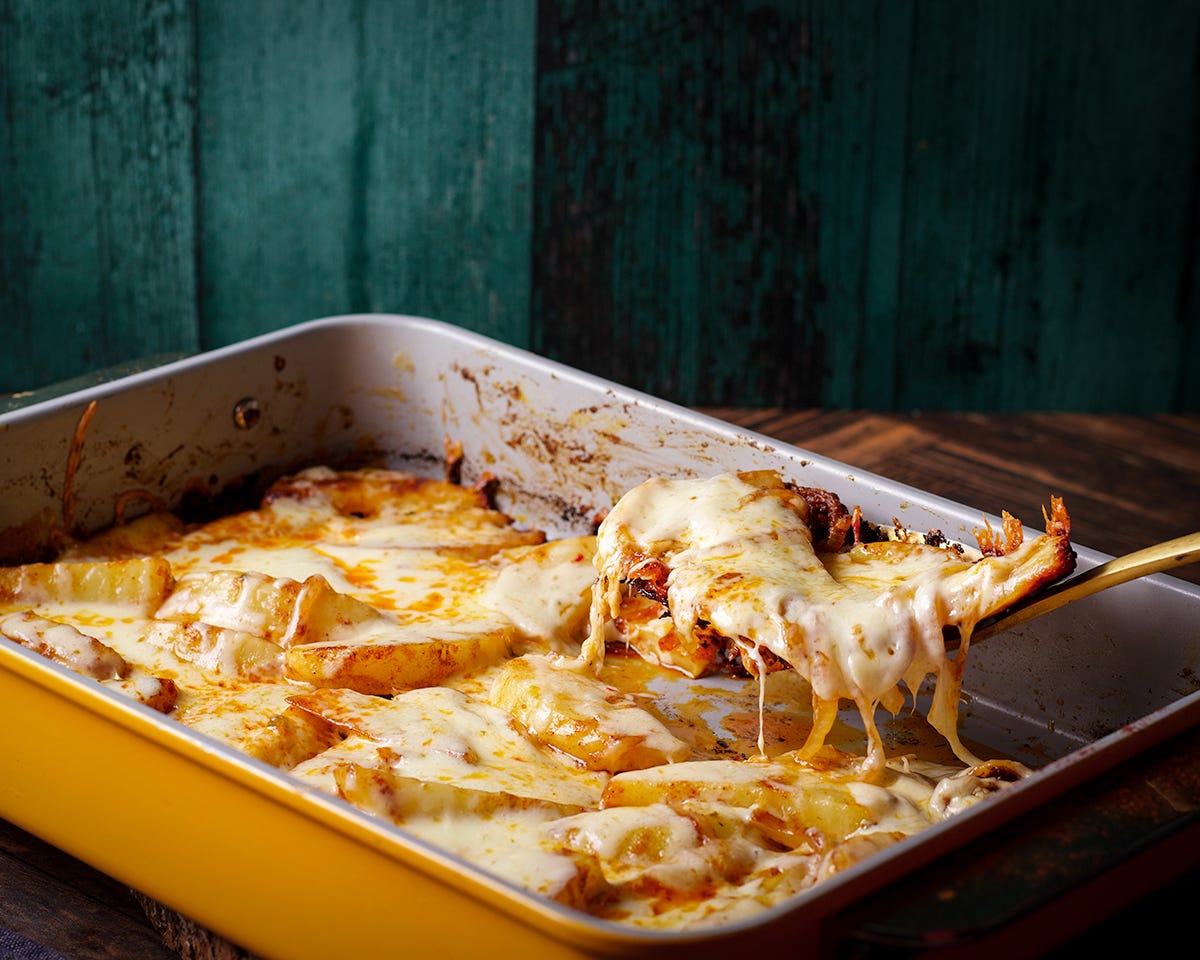
In this week’s issue, I’m sharing her recipe for pepper jack potatoes.
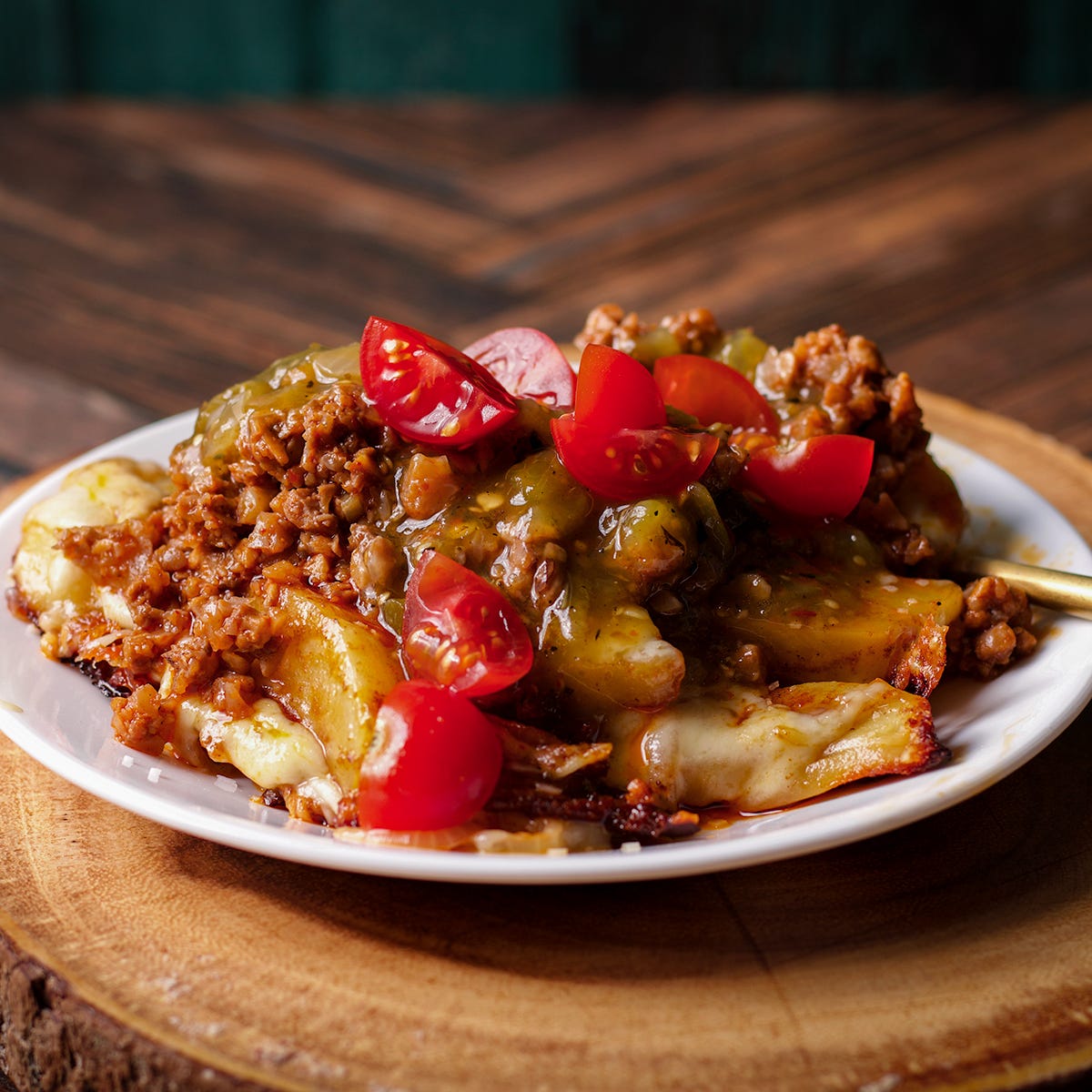
I’ve never met a potato recipe I didn’t love and these are covered in cheese, so there was never any possibility this wasn’t going to be one of my favorite recipes. These make a delicious side dish for any kind of roasted or grilled meat or, do as we did and use them as a base for vegan taco meat, salsa, and some fresh tomatoes.
Here’s what you need:
Potatoes - peeled and cut into 1/2-inch wedges (We like Yukon gold potatoes)
1 yellow onion, cut in half and sliced crosswise into very thin slices
Butter - about 1/3 of a cup per 6 medium potatoes, melted
Chili powder, paprika, cumin, and salt
Grated pepper jack (or any kind of grated cheese); 2-3 cups for a 9x13 pan of potatoes
Heat the oven to 400 degrees.
Add the potato wedges and sliced onion into a 9x13 rectangle baking dish (I love my Caraway non-stick baking pan for these potatoes because the non-stick surface really does keep everything from sticking).
Pour the melted butter over the potatoes and onions and stir everything around so the vegetables are coated in butter. Sprinkle with spices and salt and top with half the cheese.
Cover the pan with aluminum foil and bake until the potatoes are tender, about 40 minutes.
Remove the foil from the pan and sprinkle with the rest of the cheese. Put the pan back in the oven and cook until the cheese is melted and bubbly, about 5 minutes longer.

Homemade muffin mix
This recipe for homemade muffin mix is adapted from a recipe in Bravetart by Stella Parks. She uses virgin coconut oil in her muffin mix, a genius trick because it’s nonperishable so you can stock your pantry with a bag of this muffin mix where it will keep for many months.
As opposed to refined coconut oil which is liquid at room temperature, virgin coconut oil is solid at room temperature. To measure it, pack it into a measuring cup with the back of a spoon.
2 cups all-purpose flour
2/3 cup whole wheat flour
3/4 cup sugar: white granulated sugar, brown sugar, or a combination of the two
2 teaspoons baking powder
1/4 teaspoon baking soda
1 teaspoon kosher salt (or 1/2 teaspoon table salt)
1/8 - 1/2 teaspoon spices: nutmeg, cinnamon, ginger, or cloves (this is optional; use as much or as little as you like)
3/4 cup virgin coconut oil
Add all the ingredients to the bowl of a stand mixer fitted with the paddle attachment and mix on low speed for a couple of minutes until the coconut oil completely disappears into the dry ingredients. Store in a zip-top bag or other air tight container at room temperature (do not refrigerate). The mix will keep up until the sell-by date on your container of coconut oil.
This mix makes enough to bake 12 muffins.
How to use this mix to make muffins:
Add one recipe muffin mix to a mixing bowl and add 1/2 cup milk (any kind, including buttermilk and any non-dairy milk), 2 large eggs, and 1 tablespoon vanilla extract (or 2 teaspoons vanilla extract and 1 teaspoon almond extract). Use a wooden spoon or rubber spatula to stir until blended.
Divide the batter among 12 paper lined baking cups and bake at 350 degrees for 18 - 22 minutes.
Add ins: Gently fold in about 2 cups of fresh or frozen berries or peeled and diced apples, peaches, or pears. To make chocolate chip muffins, add about 1 cup regular size or mini chocolate chips. You can also add a handful of nuts or shredded coconut. To make zucchini muffins, press as much water as you can from 3 cups shredded zucchini (I usually twist it in a clean kitchen towel) and fold that into the batter.
If you like crumb topped or streusel topped muffins:
Top muffins with the oatmeal streusel in this recipe for Blackberry Muffins with Oatmeal Streusel
Top muffins with the butter crumb topping in this recipe for Raspberry Muffins
My 10 Favorite Cookbooks (as of today)
Someone asked me recently to share a list of my favorite cookbooks and I’m not sure a more challenging question has ever been asked of me. 😂
It is difficult for me to express how much I love cookbooks. Before we moved into an RV I had stacks and shelves of them in every single room of the house except the bathrooms and the kids’ rooms.
When we decided to move into an RV, we spent months getting rid of almost all of our stuff and making really hard decisions about what we would bring with us. Out of all the things we sorted through, deciding what cookbooks to bring with me was probably the most difficult.
Steve would argue that we have too many cookbooks in our tiny home on wheels. I would counter that in comparison to how many I want to have with us, I should be awarded a medal for Herculean self restraint.
So, to answer my friend about my favorites, I looked to the ones I choose to cart around with us. Every time we move to a new location I have to pack them all away and then unpack them again and this never feels like a burden. I actually kind of love it. I feel inspired just by holding them and setting them on the shelf. Like somehow all the delicious ideas inside might be absorbed just by having them near me.
For context, before writing this, I counted how many I actually have with us - 48. Plus a growing number on kindle, which is not my favorite format, but I’m learning to live with it. Out of those 48, here are my current top 10:
Mastering The Art of French Cooking by Julia Child (this is a two volume set, but I’m counting it as one just because I can).
How to Cook Everything by Mark Bittman
Salt, Fat, Acid, Heat by Samin Nosrat
Plenty by Yotam Ottolenghi (although it’s a true tossup between this and my other favorite Ottolenghi book, Flavor)
Baking With Dori by Dori Greenspan
Bravetart by Stella Parks
Rick Bayless's Mexican Kitchen by Rick Bayless
Bake Wise by Shirley O. Corriher
Simply Julia by Julia Turshen
Bouchon by Thomas Keller
I also want to mention a book called The Flavor Matrix which I rely on heavily during recipe development, especially in the idea stage. The book breaks down the flavor compounds of specific ingredients and groups them together in charts that let you discover unexpected combinations.
For example, it might sound surprising, but strawberries and mushrooms have a lot of the same flavor compounds. Learning this, I created this recipe for Mushroom and Noodle Stir Fry with Strawberries. The combination is not something I would have expected to work - but it really does.
So, if your interested in what flavors go together and why, this will likely be an interesting book for you.

This newsletter would not exist if not for the members of The Lost Supper Club, who show their support with a paid subscription thus ensuring that the vast majority of readers can keep reading this newsletter for free. As a thank you, I try to provide those paid subscribers with some cool stuff, including three free cookbooks!
A paid subscription is just $35 a year. Find out more about becoming a member of the Lost Supper Club.
❤️ Did you know that if you hit the heart or recycle symbol at the top or bottom of this post, it makes it easier for other people to find this newsletter?
I wonder what exactly would get you run out of town! 🤣 Love the cookbook recs. As always, everything looks fabulous!
I absolutely agree that a town's grocery store is a window into it's citizens and history. This was a great 'reheat'. I hope you are having some amazing travel adventures.