



❤️ Did you know that if you hit the heart or recycle symbol at the top or bottom of this post, it makes it easier for other people to find this newsletter?


In this issue:
Observations from the super comfy sidelines
This week’s challenge: Introduce yourself! Who are you? Where do you call home? What is one interesting thing you can tell us about yourself?
The Traveling Friday Night Mooch-a-Meal Club! - A super fun idea from a Lost Supper Club member!
Printable recipe cards! A new perk of being a Lost Supper Club member (paid subscriber) is that you will receive downloadable and printable pdfs of every recipe! Scroll to the bottom of this issue to download all the recipes in this issue + all the January recipes!
3 New recipes! Chimichurri Steak Fries, Orange Marmalade and Poppy Seed Muffins with Sage, Spaghetti Squash Kimchi Bowls
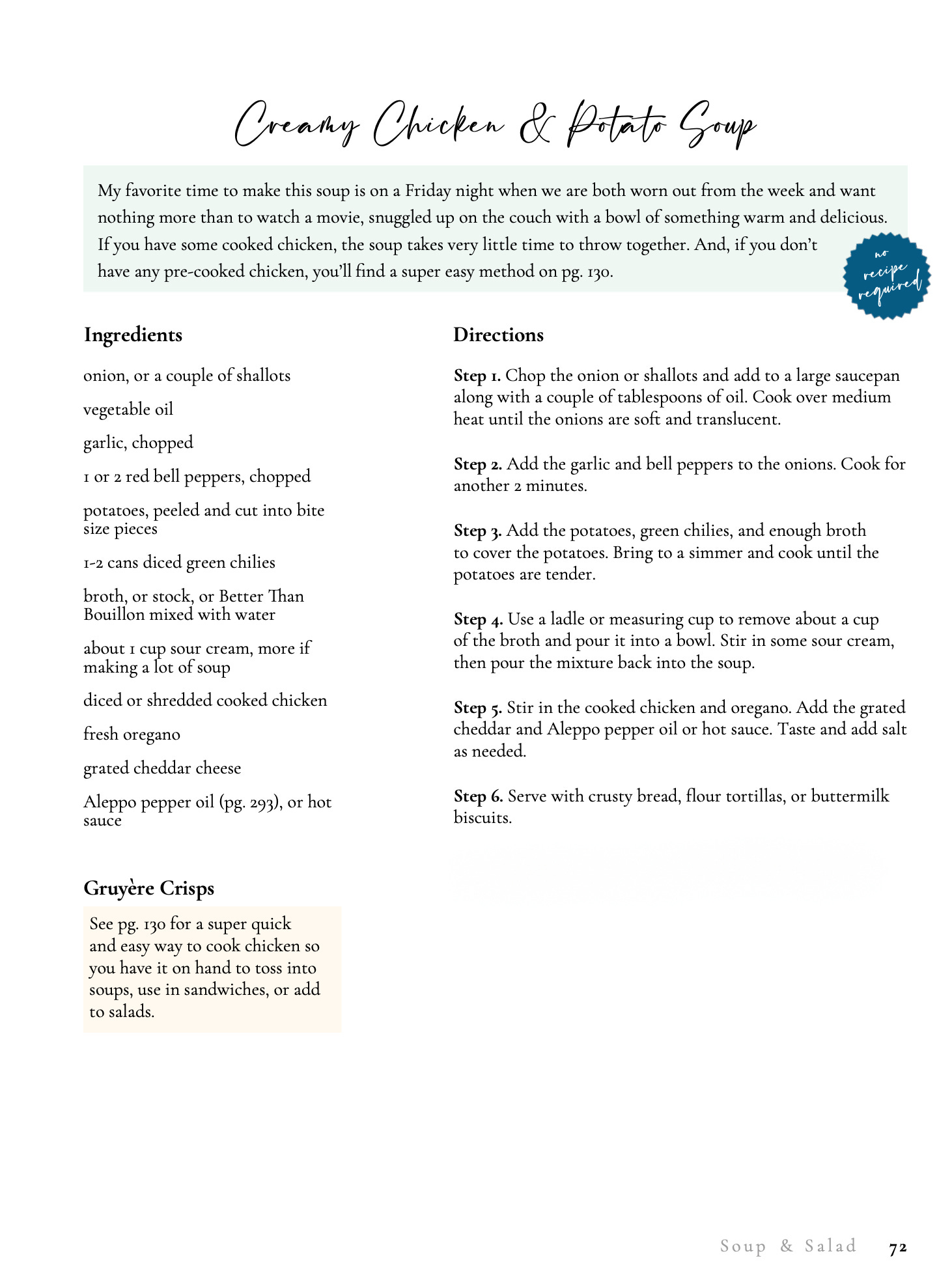
A recipe from the cookbook: Creamy Chicken and Potato Soup with Chilies and Cheese
Reading recommendations
One quick thing before we dive in, I was so honored to be a guest on Stephanie Hansen’s remarkable podcast, Dishing with Stephanie’s Dish! 🎉 Stephanie is a skilled broadcaster and when you are a guest on her show it is immediately apparent that you are in good hands and can just relax. The ability to capture and showcase other people’s stories is such a valuable gift, isn’t it?
If you listen, I hope you enjoy!

Observations from the super comfy sidelines
“We cannot stay home all our lives, we must present ourselves to the world and we must look upon it as an adventure.”
— Beatrix Potter

We all tend towards something and Steve and I are the kind of people who tend towards solitude, each in our own way and for our own reasons.
As a toddler, one of my oft repeated phrases, so I’ve been told, was, “Leave alone. I do it myself.” This tracks because it is still how I prefer to do almost everything. By myself, on my own, with no one watching or interrupting.
I do not want to go to exercise classes or any sort of thing that requires group participation. When our kids were younger I did not join the PTA or the many neighborhood or community associations or sign up to be the class mom. I have happily worked for myself, with myself, and by myself for nearly 20 years.
When we lived in a house in a neighborhood the only reason we knew any of our neighbors was because we lived next door to a woman who knew all the neighbors. She can be credited with introducing us to literally every other neighbor we came to know during the 16 years we lived there.
One of our motivations for moving into an RV was the ability to park ourselves in solitary locations. And also (sorry to toss this at you in the middle here but it’s a sizable part of the story), our son died the week we moved from his childhood home into our RV. And for a couple of years, large, open, solitary spaces saved us. That can honestly not be understated. I know the value of solitude and am not ever giving it up. But perhaps it doesn’t need to occupy so much space anymore?
None of this should be interpreted as evidence that I am not utterly fascinated by the world and the people living in it.
Traveling around the country as we do, one of our favorite things is discovering new places to people watch. We are happy to interact when interaction is required, but perfectly content to sit on the sidelines and observe other people’s interactions for hours.
So it might seem an odd choice that I’ve turned our year into a series of social Lost Supper Club events.
If you’ve noticed that contradiction, you’re not the only one.
After missing a call from our youngest daughter because we invited campers that we had just met over for cake, she replied, “When did you and dad become so social? It’s weird.”
In my almost 50 years on this planet, I have often matched my behavior to the perceived requirements of the social situation. I know you know what I mean.
At social events for Steve’s work, for example, there was (is) and internal switch I could flip on and be all smiles and laughter and interested questions and conversation starters. It’s not that it was entirely an act. That person is also me. But it also isn’t completely me. She is the performer. A caricature, if you will. There is truth in it, but the truth is perhaps more interpretive and representational.
Playing that part can sometimes be fun. But it’s also almost always exhausting.
The aforementioned daughter of mine called me out on it one day. She said sometimes it seems like I’m performing. She struggled to communicate what she meant. But I knew.
So, you can see why watching from the sidelines is so appealing. I really do like people. Humans fascinate and capture me. Books, movies, and documentaries based on a true story are my favorite kind. As a spectator, you get to sit back and watch the show with no pressure to perform. No one is looking at you. No one is expecting anything from you.
I love that.
But, it’s a double edged sword, isn’t it? Because it doesn’t matter who you are or what your story is, meaningful social connection is a vital part of our humanity. Without it we are lesser. Our life is not as rich. You can’t connect from that observational post.
So lately I’ve been doing a lot of reflection about how to be in social situations and just be me. Fully me, I mean. No performance required. What, I think, would it be like to be in the relaxed state of a spectator while also being social?
Also, what if all those expectations I think are coming from other people are really mostly coming from me?
I asked that question last week in notes and someone replied to say that when they think about what they must bring to social situations they freeze up. But when they think about how they might receive social interactions, the pressure abates.
How intriguing. It strikes me that the attitude of receiving is akin to just being present. It requires a deeper focus on listening and seeing the other person and somehow manages to lessen that weird pressure to perform.
(As an aside, a more negative interpretation of receiving is someone who we might call a taker. These are the types of people who are mainly interested in what they can get from others not what they can give. That’s not what I’m taking about here.)
Anyhoo.
My grand experiment this year is to increase the number of meaningful social connections in my life and give my inner performer some time off, maybe move her into semi-retirement.
For all of you who relate, and those of you who don’t relate but are here to offer some gentle guidance and encouragement, I’m grateful to have you in the same boat.
And on that note… might you be willing to introduce yourself?
{What’s the difference between free and paid subscriptions? Find out more.}
This week’s challenge: Introduce yourself!
Lost Supper Club members! Please click on the comment icon at the top or the bottom of this post and introduce yourself!
Please tell us…
What is your name?
Where do you call home?
What is one interesting thing about you?

The Traveling Friday Night Mooch-a-Meal Club
I received this message from Lost Supper Club member Laura Davenport last week. I asked her if I could share it and she generously agreed. I LOVE the name of her group and the focus on cooking food that related to their roots!
Mike and I started the “Traveling Friday Night Mooch-a-Meal Club” when we were in college. We were the only married couple but two other girlfriends had “steadies” at that time and that was our group. We met every week or two depending on schedules to share a meal. Our only rule was the food had to relate to our roots…Spanish, Norwegian, Swiss/Indonesia.
As I was relating the memory I thought maybe I needed to revive this!
One idea for all of you thinking about starting your own supper club is to combine Laura’s Mooch-a-Meal Club with the Random Travel Club (from the first Lost Supper Club issue).
The idea is this: At the conclusion of every supper club dinner, randomly select a new location from anywhere in the world. You might use an actual globe or a map and blindfold one person who is tasked with placing their finger on a random location. That location becomes the theme for the food of the next supper club.

Chimichurri Steak Fries
(You’ll find a downloadable pdf with the recipe at the bottom of this post!)
While in San Diego, we spent a delightful day with Dustin and Brenda (two of the guests at the 1st Lost Supper Club!). They live near Temecula, California and took us to several of their favorite local wineries.
Temecula Valley is the largest wine-producing region in Southern California, turning out over 500,000 cases of wine each year. The area is home to nearly 50 wineries and produces more than 30 grape varieties.
We did not know any of this and were pleased as punch to tag along with people who knew where to go. One of the wineries we visited was Doffo Winery, where we shared a plate of chimichurri steak fries while tasting some of our favorite wines of the day. We also took a few photos…


(This was only our second winery of the day and it appears from the second photo that I was already getting a little bit out of control. Settle down Rebecca.)
I brought home a bottle of zinfandel because the combination of chimichurri steak fries and zin knocked my socks off.
What’s a girl to do with a bottle of really good zin in the cupboard and a fading memory of the most delicious fries she’d ever eaten? Make some chimichurri steak fries, of course.
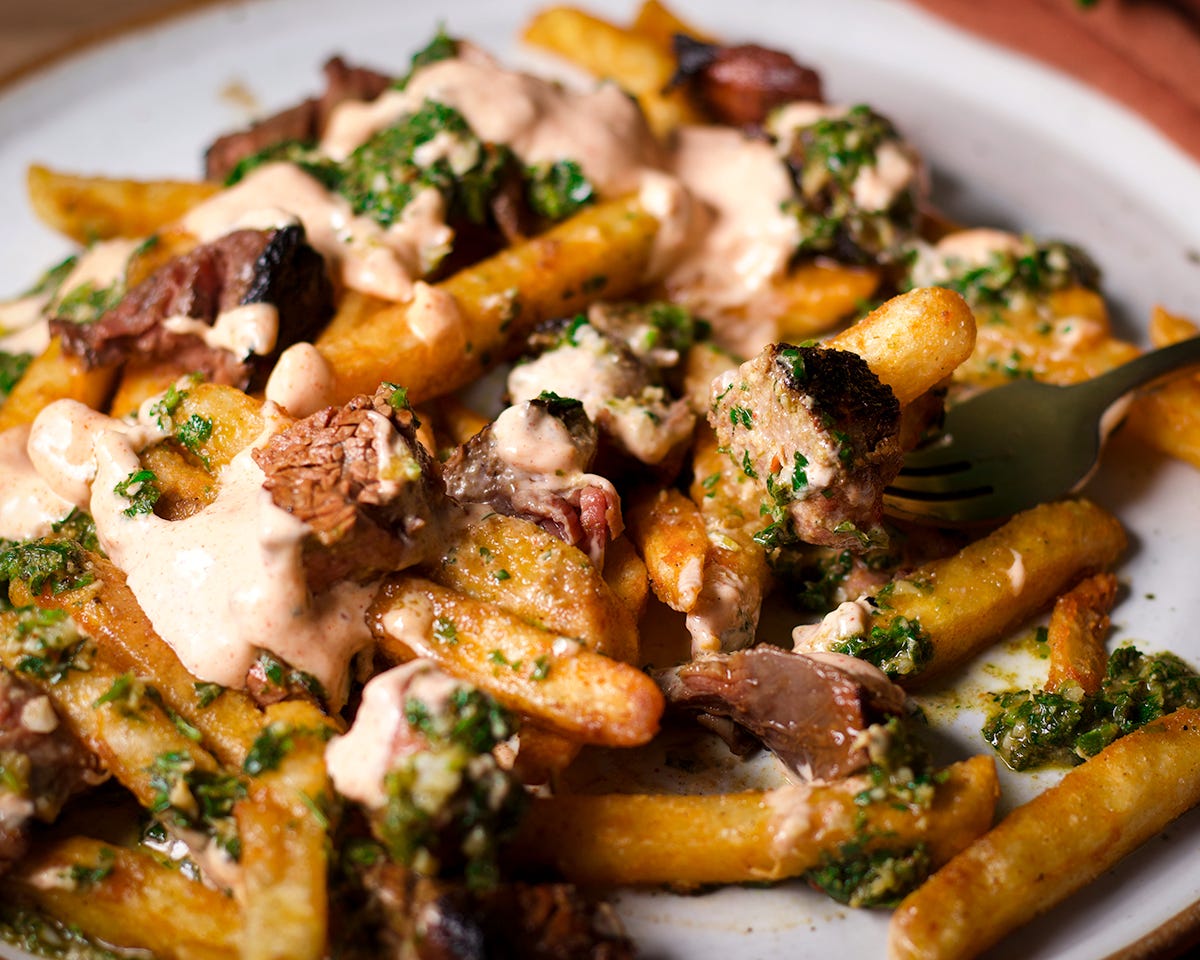
Hot and crispy french fries + tender steak + chimichurri sauce + creamy aioli = happiness. If you doubt me, it's only because you haven't tried it yet.
I mean, the state of bliss these fries induce won't last forever. But we need to take our pleasures where we can, no? So many things are outside our control BUT a plate of saucy steak covered fries is the kind of magic you can create in your life whenever you desire. Like today.
The vineyard cafe used rib eye for their fries which was fantastic but I opted for filet mignon because it’s my favorite cut of steak. I would also like to admit that I have never been good at cooking steak but the fillet mignon for these fries was so good. Like, really truly. Steve kept asking me if I'd really cooked it. As if.
The trick is to use a reverse searing method to cook the steak slowly in the oven to just below the desired temperature. Then, sear it in a cast iron pan on the stovetop for just a couple of minutes to finish cooking it and get that gorgeous crusty exterior. It was perfect.
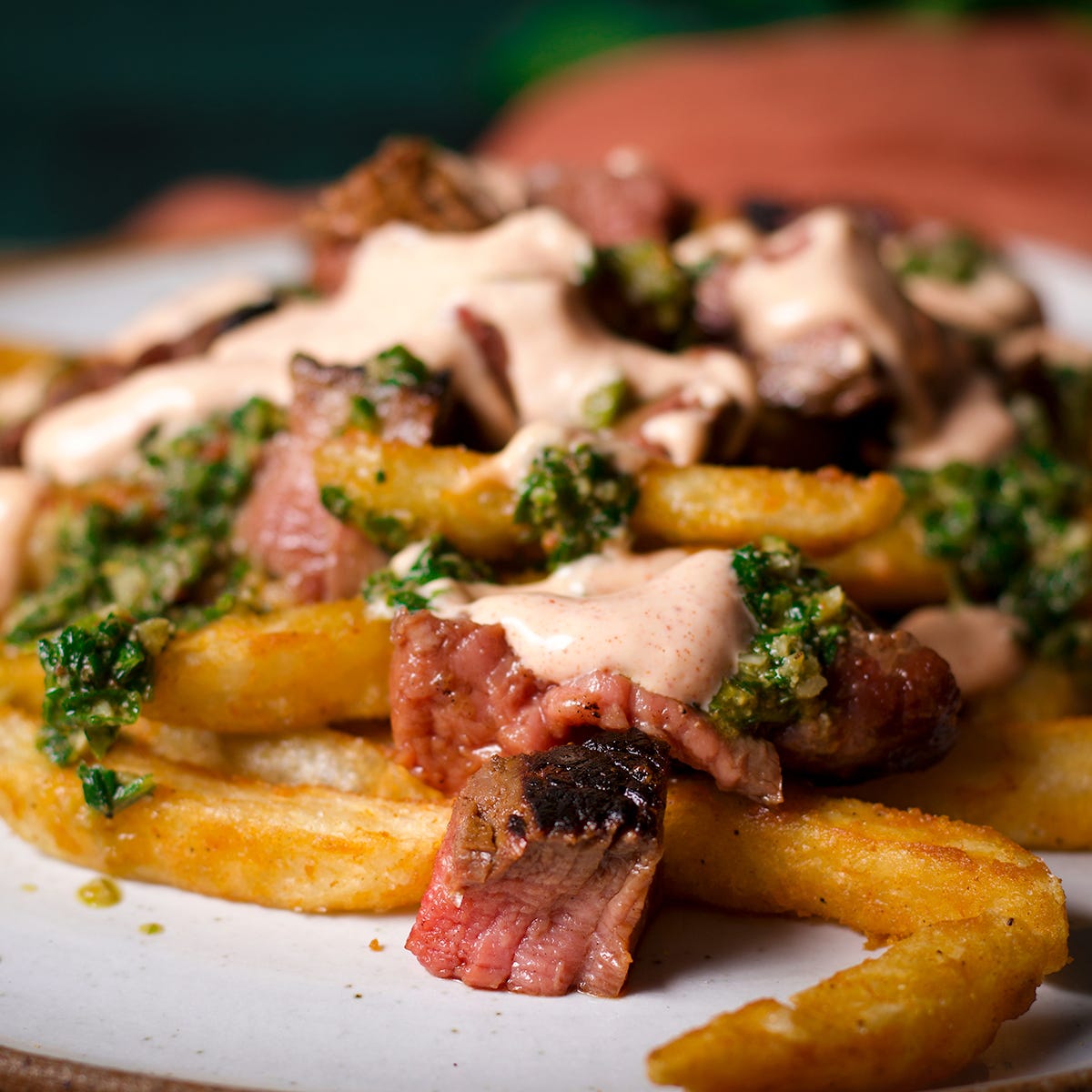
One more thing - if you’ve never made chimichurri, you’re in for a treat. It’s a magical green sauce that's one of the best ways to instantly brighten a dish with fresh flavor and color. Aside from being totally delicious, it's healthy, versatile, and super quick to prepare. You just dump all the ingredients into a food processor or a blender and give it a whirl.
Time: 45-60 minutes plus 3-12 hours of resting time
*Makes 4 main dish servings
Ingredients:
1 pound filet mignon steak
Kosher salt and ground black pepper
1 ½ cups chimichurri sauce
1 tablespoon lemon juice
2-3 clove of garlic
1 teaspoon dijon mustard
1 teaspoon smoked paprika
½ cup prepared mayonnaise
One 24 ounce package frozen french fries
How to make it:
Set the steak on a plate and sprinkle both sides with a generous amount of salt. Cover and refrigerate for at least 3 hours and up to 12 hours. The salt will soak into the meat, seasoning it from the outside in.
Follow the instructions to prepare the Chimichurri sauce. Chimichurri can be stored at room temperature for up to 4 hours and refrigerated for up to 3 days.
Prepare the garlic aioli: Add the lemon juice to a bowl. Use a garlic grater to grate the garlic into the lemon juice. Alternatively, finely mince the garlic. Add the dijon mustard, smoked paprika, and about ¼ teaspoon each salt and pepper. Stir to mix and let rest for 10 minutes, which will soften the sharp edges of the garlic. Add the mayonnaise. Stir to combine, then cover and refrigerate until ready to use.
30 minutes before you want to cook the steak: Heat the oven to 300 degrees F (148 degrees C). Remove the steak from the refrigerator, and let it rest uncovered on the countertop, to come to room temperature. Use paper towels to blot excess moisture from the outside of the steak. Set the steak on a rack inside a broiler pan or on a wire rack set inside a rimmed baking sheet. Bake in the preheated oven until the internal temperature of the thickest part of the steak is 10 degrees lower than the desired temperature (see the list of internal temperatures for beef above).
Set a cast iron pan on the stovetop over high heat. When the pan is really hot, add no more than a tablespoon of canola, vegetable, or grape seed oil to the pan. Add the steak. Sear the steak in the hot pan for about 2 minutes, flipping it over every 20 to 30 seconds. The steak is done when it's reached the internal temperature you prefer and has formed a gorgeous crust on the outside.
Set the steak on a cutting board and let rest for 10 minutes before cutting.
Prepare the french fries according to the package instructions. I usually fry them in vegetable or canola oil, but bake them if you prefer, or cook them in an air fryer.
While the fries cook, cut the steak into small bite size pieces.
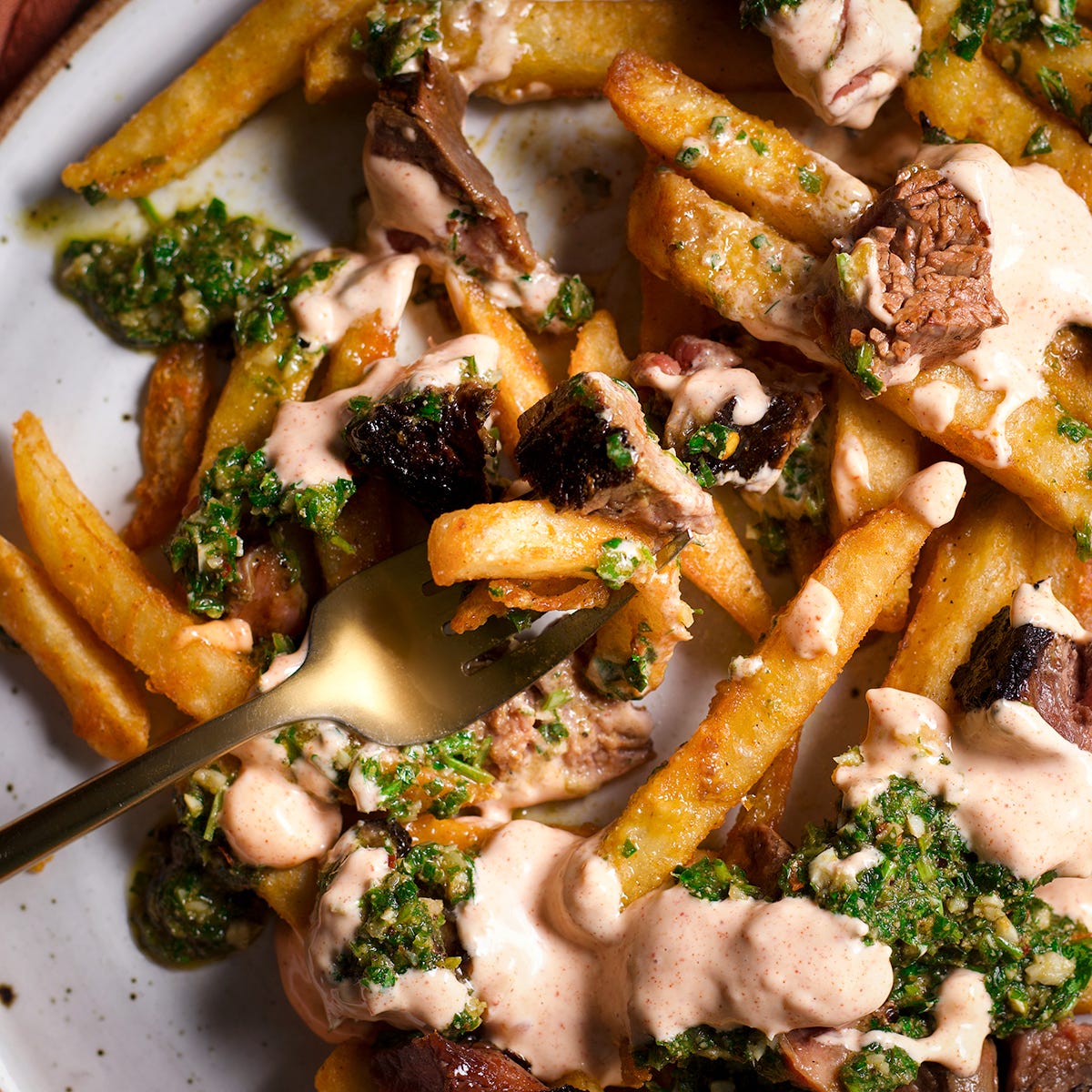
To serve: Divide the fries among 4 plates. Top with steak, spoon fulls of chimichurri sauce, and a generous drizzle of aioli.
Recipe notes:
Internal temperatures for steak
Rare: 120–125°F (52–54°C) Cool red center
Medium rare: 130–135°F (54–57°C) Warm red center
Medium: 140–145°F (60–63°C) Warm pink center
Medium well: 150–155°F (66°C) Slightly pink center
Well done: 160–165°F (71°C) Little or no pink
Use a digital meat thermometer to test the internal temperature of a steak. I've used this thermoworks digital thermometer for years and absolutely love it because it gives me an immediate accurate reading.
Orange Marmalade and Poppy Seed Muffins with Sage
(You’ll find a downloadable pdf with the recipe at the bottom of this post!)
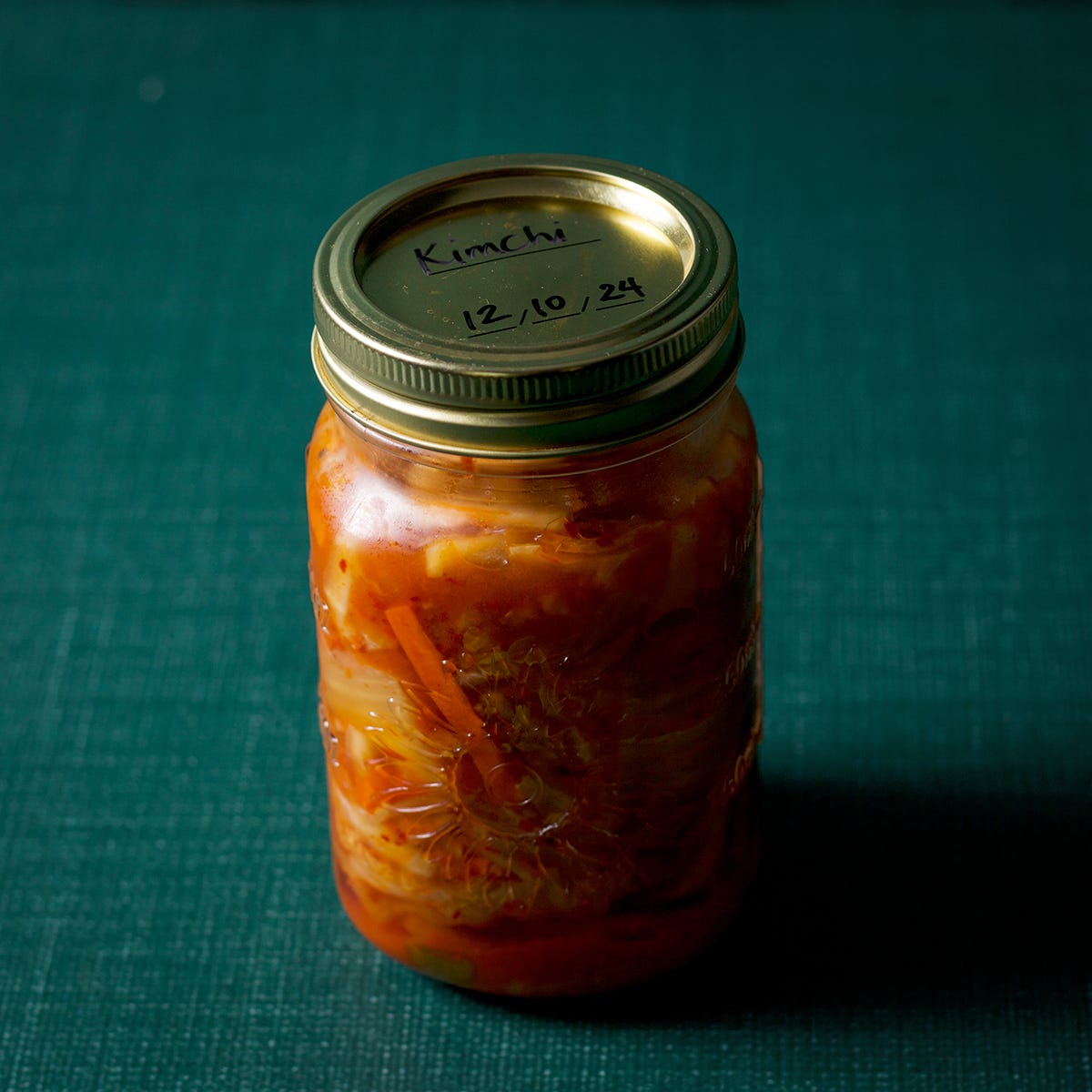
When you co-host a Lost Supper Club dinner with the talented and delightful Betty Williams of the esteemed Betty Eatz Newsletter and Podcast, she shows up at your door with homemade gifts. AS IF the massive pan of slow roasted pulled pork tacos and her smiling, happy face wasn’t enough, she will also bring you a new friend - hello neighbor Kim! - a jar of homemade kimchi and another of tart orange marmalade, which she made from fruit harvested from her own backyard.
You might start to wonder if the whole Lost Supper Club thing was a ploy to meet people who will bring me delicious treats, and all I’ll say in my defense is that it’s a seriously fantastic perk.
So what’s a girl to do with jars of homemade kimchi and orange marmalade???
Make some orange marmalade and poppy seed muffins for breakfast and spaghetti squash and kimchi bowls (recipe below) for lunch, that’s what!
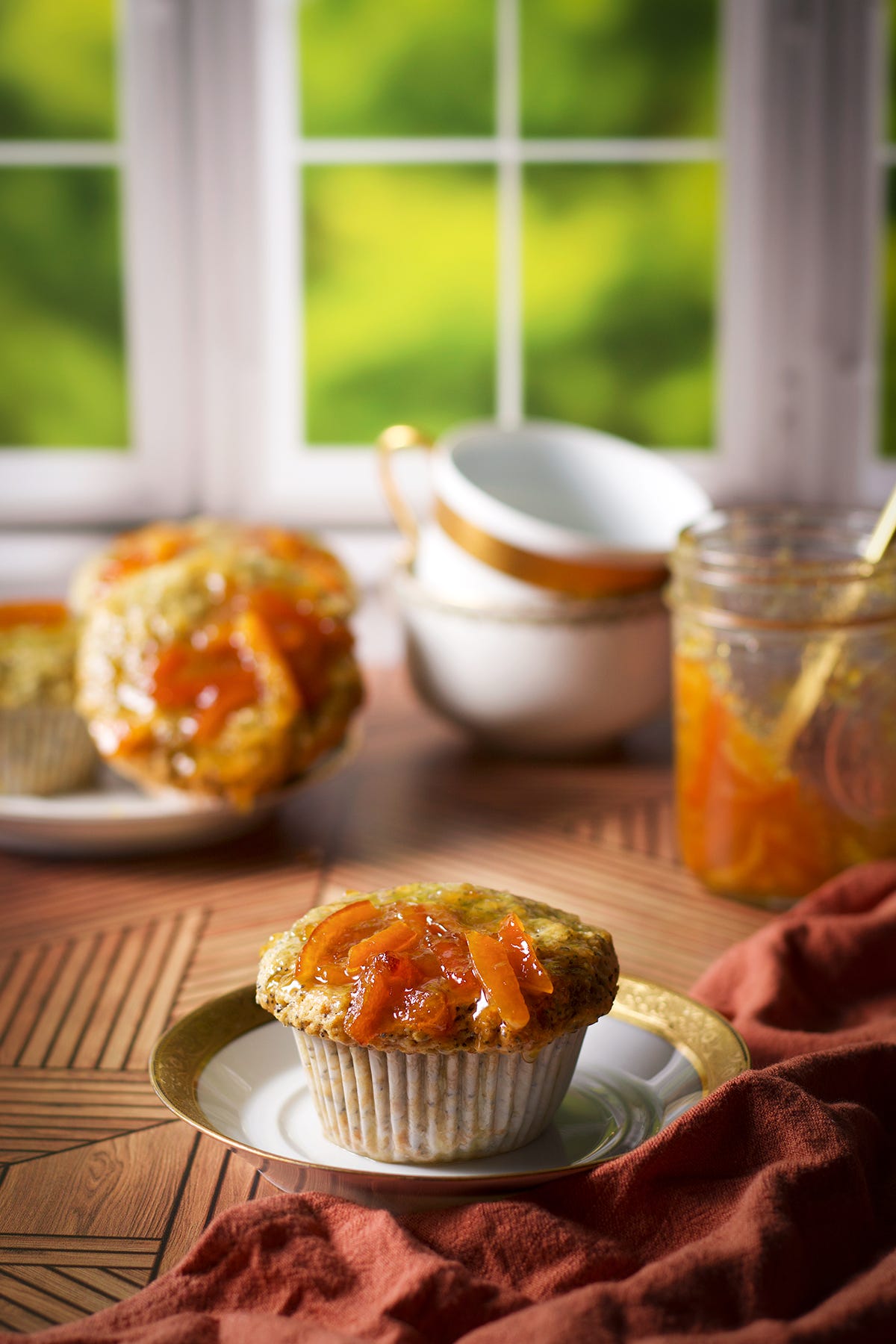
Ever since Shell Plant , who writes the drool-worthy newsletter Bake Experiments, shared two recipes featuring orange and rosemary, I’ve become obsessed with the combo of citrus and herbs in sweet treats. (Shell’s recipe for orange and rosemary shortbread is genius.)
So, with that in mind and my jar of homemade marmalade, I give you this recipe for orange marmalade and poppy seed muffins flavored with sage and vanilla.
Look, unless you know Betty and can finagle a jar of her homemade marmalade, your muffins will not be as good as ours were. I don’t know what to tell you. 😉
But, they are possibly still going to be one of the most delicious things you bake this year. Think I’m overselling it? Make them and see for yourself.
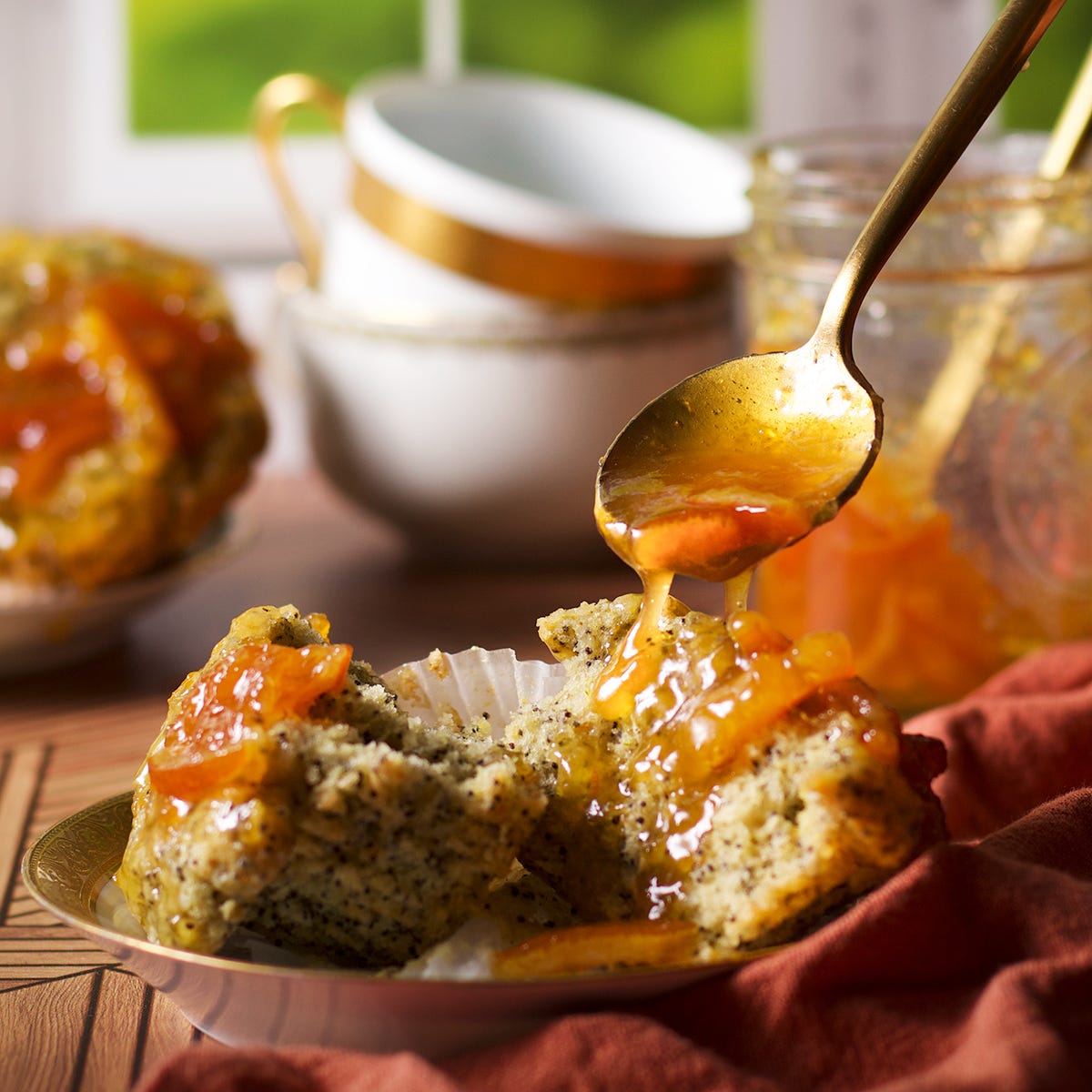
One final note: the base of these muffins uses the homemade muffin mix in The Let’s Get Lost Cookbook. The mix uses virgin coconut oil because it’s nonperishable so you can stock your pantry with a bag of this muffin mix where it will keep for many months. The important thing to know about virgin coconut oil is that it’s solid at room temperature. To measure it, pack it into a measuring cup with the back of a spoon. (Also, if you have a bag of said muffin mix in your pantry, these muffins will come together super quick!)
Time: 60 minutes
Makes 12 muffins
For the muffins:
2 2/3 cup all purpose flour
3/4 cup granulated sugar
2 teaspoon baking powder
1/4 teaspoon baking soda
1/2 teaspoon kosher salt, OR ¾ teaspoon table salt
1 teaspoon ground dried sage
The zest from 1 medium to large size orange
3/4 cup virgin coconut oil, packed
1/4 cup poppy seeds
1/2 cup + 2 tablespoons milk
2 large eggs
1 tablespoon vanilla
1/2 cup orange marmalade
For the honey marmalade glaze:
1/2 cup marmalade
1/2 cup honey (if the marmalade you are using is very sweet, you might want to use a bit less honey)
1/2 cup salted butter
1/4 teaspoon ground dried sage
How to make them:
If your muffin pan is not non-stick, grease the top of the pan with a little bit of softened butter or vegetable shortening to keep the tops of the muffins from sticking to the top of the pan. Line the pan with paper liners and heat the oven to 350 degrees F.
Add the flour, sugar, baking powder, baking soda, salt, sage, orange zest, and coconut oil to a bowl and beat with an electric mixer on low speed until the coconut oil is blended completely into the flour and it resembles damp sand. Stir in the poppy seeds.
Add the milk, eggs, and vanilla to a bowl and stir with a wire whisk to blend. Add this to the flour mixture and stir just until everything is blended together.
Divide the batter among the 12 paper lined cups. Divide ½ cup of marmalade amongst all 12 muffins, topping the batter in each muffin cup with a generous teaspoon of marmalade.
Bake the muffins for 25-30 minutes. To test that the muffins are done, insert a toothpick in one of them and remove it. If there is no evidence of raw batter on the toothpick, the muffins are done.
While the muffins bake, prepare the glaze: Add all the glaze ingredients to a small saucepan and set it over medium-low heat. Cook, stirring often, until the butter has melted and everything is combined. This will only take a few minutes. Set aside.
Allow the muffins to cool in the pan until they can be removed without falling apart then set them on a wire baking rack.
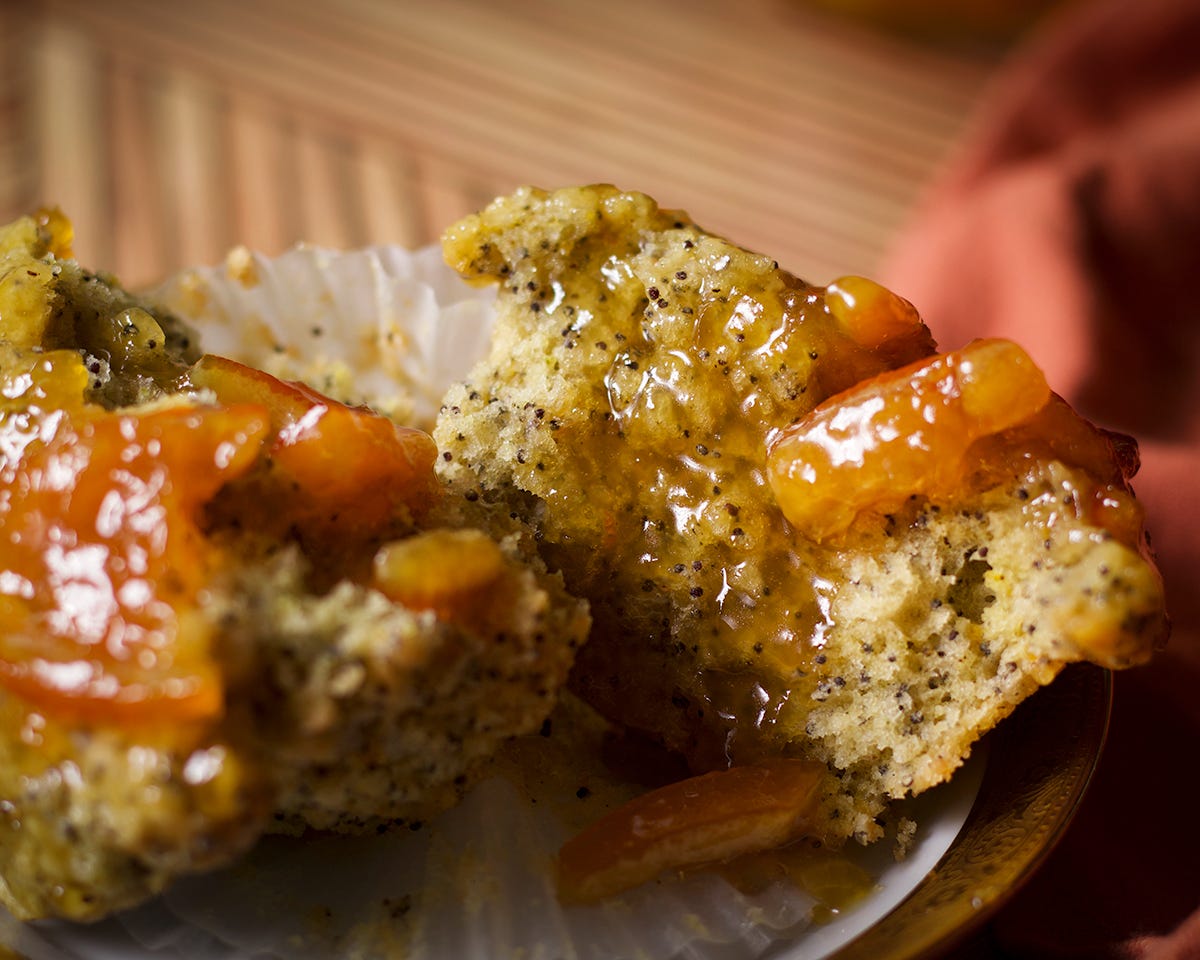
Coat the tops of each muffin with some of the glaze and then serve the remaining glaze for drizzling. I like to cut these in half and drizzle each half with more glaze.
These are best served warm but also very good at room temperature. To reheat, set a muffin on a plate and cover it with a damp paper towel. Heat in the microwave for 20-30 seconds.

Spaghetti Squash Kimchi Bowls
(You’ll find a downloadable pdf with the recipe at the bottom of this post!)
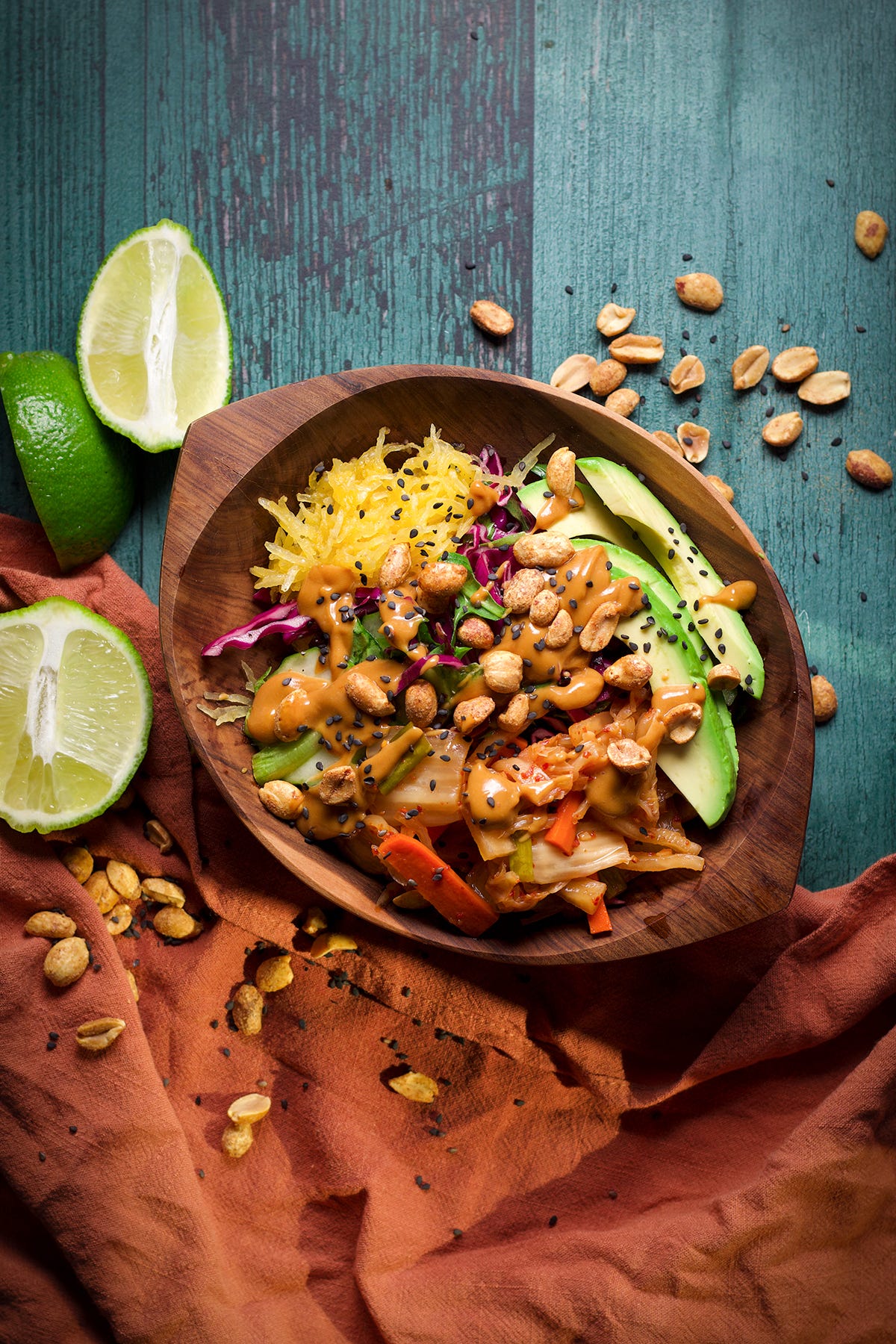
As with all no recipe required dishes, this is a recipe that’s designed to be thrown together with whatever you have or whatever you like.
By the way, these veggie-packed bowls would also be hearty and delicious with grains, maybe brown rice or quinoa, in addition to or instead of the spaghetti squash.
Time: 60 minites
Makes 2-3 servings
Ingredients:
Peanut sauce (recipe follows)
One small spaghetti squash
About 1 tablespoon extra virgin olive oil
Salt and pepper
2 tablespoons rice vinegar
1 teaspoon honey
1 teaspoon toasted sesame oil
1/2 English cucumber
1 cup very thinly sliced red cabbage
1 cup baby greens
1/2 cup kimchi
1 avocado
Roasted salted peanuts
1 tablespoon sesame seeds
Lime slices for servings
How to make it:
Prepare the peanut sauce then transfer it to a jar or a bowl. Keep it at room temperature for up to 4 hours or in the refrigerator for up to 3 days.
Roast the spaghetti squash: Heat the oven to 450 degrees F. Cut the squash in half and scoop out the seeds. Brush the flesh with olive oil and sprinkle generously with salt and pepper. Place both halves, cut side down, in a rectangle baking dish. Add enough water to come about an inch up the sides of the pan. Place the pan in the oven and roast until the squash is tender, about 30 minutes.
While the squash roasts, add the rice vinegar, honey, sesame oil and about 1/2 teaspoon of salt and pepper to a bowl. Whisk with a fork to combine and set aside.
Slice the cucumber into very thin slices (if you have a mandolin, now is the time to use it). Add the sliced cucumber, red cabbage and greens to a bowl. Pour the dressing over the veggies and toss to mix.
After removing the squash from the oven, remove it from the pan and let it rest until it’s cool enough to handle. (You can also cook the squash up to 2 days in advance.) Use a fork to remove the strands of spaghetti squash from the peel. As you scrape the fork along the flesh, strands of squash will come apart. Divide the squash between 2 or 3 bowls.
Pile the cucumber and cabbage salad on top of the spaghetti squash. Top with kimchi.
Cut the avocado in half, remove the peel and the seed, slice, and add to the bowls.
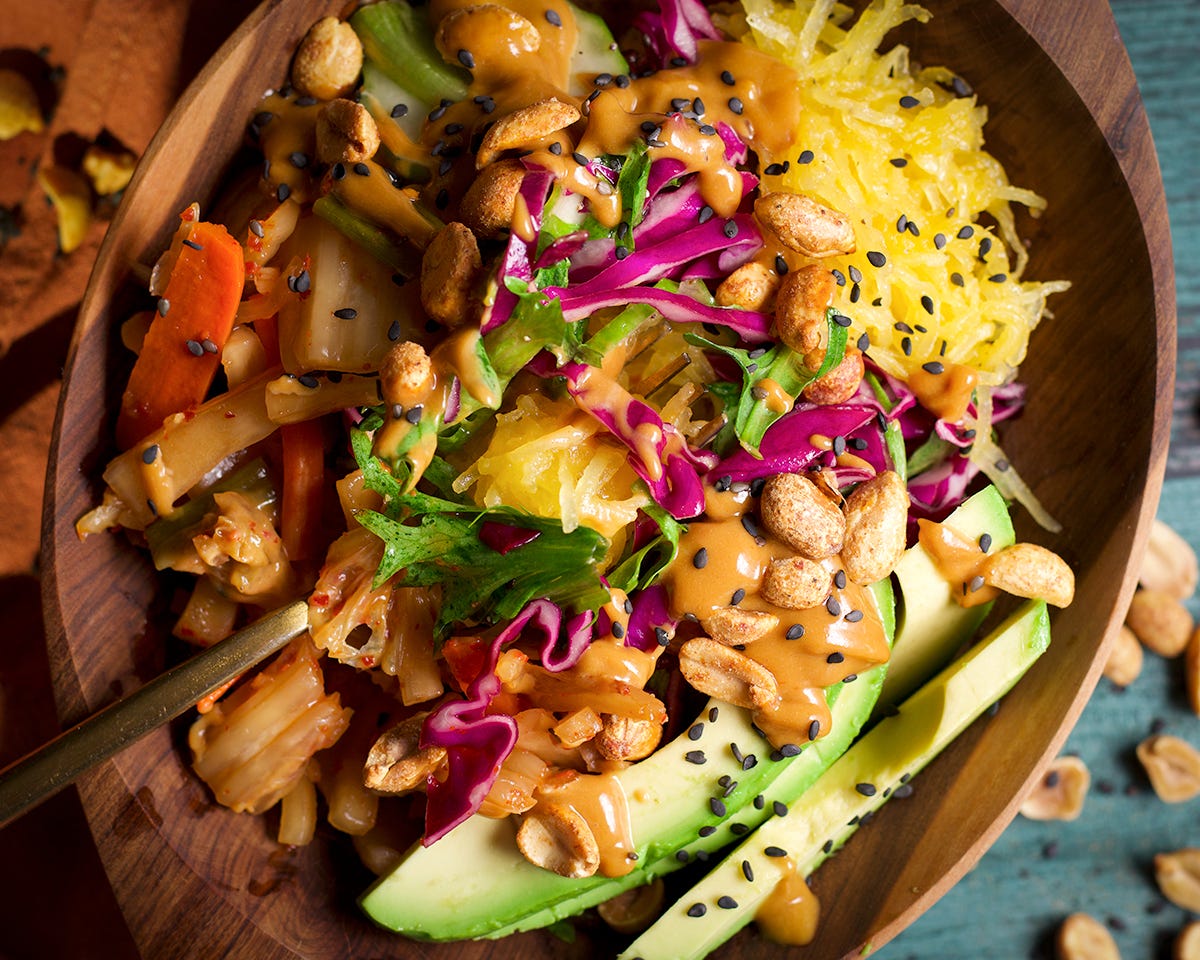
Drizzle peanut sauce over the bowls and top with a handful of roasted peanuts and a sprinkle of sesame seeds. Serve with lime wedges.
For the peanut sauce:
This peanut sauce is pulled from the pages of The Let’s Get Lost cookbook where I used it in chicken and kale bowls with peanut sauce. But honestly, there isn’t much that a drizzle of peanut sauce won’t make better.
1/2 cup peanut butter, smooth or chunky
1/3 cup regular or low sodium soy sauce or tamari
2 tablespoons toasted sesame oil
2 tablespoons rice vinegar
1 teaspoon - 2 tablespoons chili garlic sauce, depending on how spicy you want it
2–3 tablespoons brown sugar, granulated sugar, honey, or agave (I usually use brown sugar)
1/2 teaspoon ground ginger
1/4 cup of water
Add all of the ingredients to a blender or a food processor and process until smooth. Set it aside if using it soon, or refrigerate for up to a week.
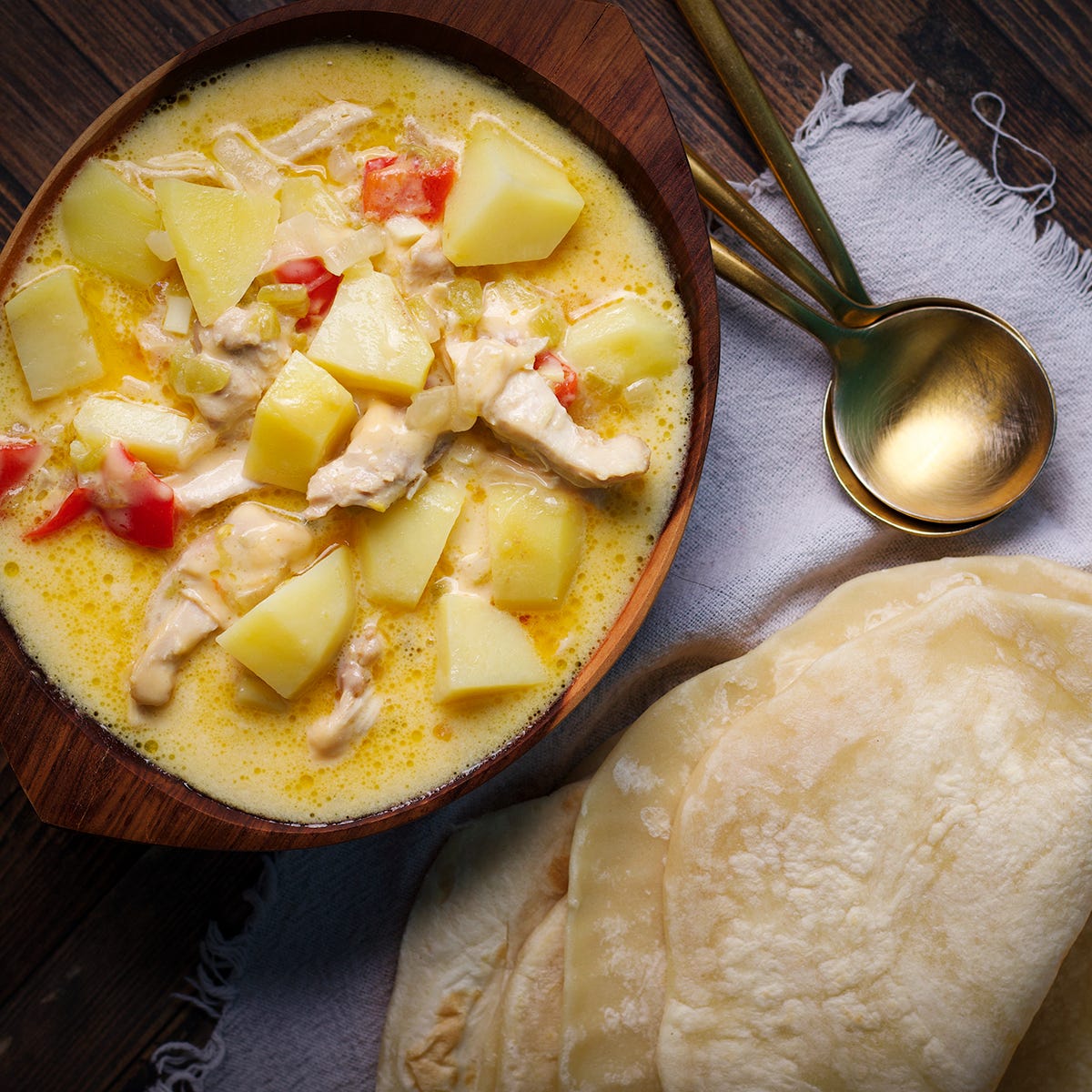
From the cookbook: Creamy Chicken and Potato Soup with Chilies and Cheese
Have you snagged your copy yet? If so, you might have already eyed this creamy, comfort-filled bowl of cheesy chicken and potatoes. If not, give it a try and see if that doesn’t convince you that you need that book on your bookshelf asap. 🙂
Reading recommendation!
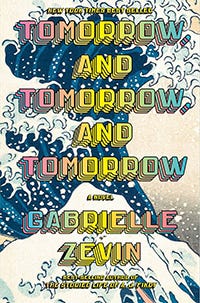
Tomorrow and Tomorrow and Tomorrow.
I just finished reading this endearing book and it captured my heart. This was the first book of Gabrielle Zevin’s that I’ve read and I was so impressed with her talent for character development. Piece by piece, page by page, the characters grow into complicated, multi dimensional people before your very eyes.
The story follows friends from their childhood into middle age and Gabrielle skillfully weaves all the growth, change, and challenges of growing up and becoming who you are right into the fabric of the story. It was the kind of book that I loved more with every page.
One final note, the characters in the story are video game designers. If you’re not into video games, don’t let that stop you from reading this book. I am about as far from being a gamer as you can get and that didn’t affect my enjoyment of this book in the least. In fact, it gave me a much deeper appreciation for why people love video games so much. Not enough to want to start playing them, mind you. But I do feel like I have a much better grasp of the appeal.
Downloadable pdfs for all the recipes
From this week’s issue:

From the January issues:
That’s all for now, friends. I hope you have a delightful week and, if you are enjoying this newsletter, please tell your friends.
And please, if you haven’t already, introduce yourself!
I loved this post so much, Rebecca, and you are a kindred spirit. I felt like I was reading about myself! I too am an introvert who needs open spaces to come back to center, and I too am working on being more authentically me in every situation. I loved the line about asking what we can receive from social situations - I'm going to hold onto that. Very glad to be supporting your work!
Hi, I’m Judy. I live in Desert Hot Springs California (near Palm Springs). Used to own a mineral water spa in DHS but sold it and retired 5 years ago. I love to cook and travel, I’m actually writing this as we cruise away from Dominica, heading toward Martinique. I’m 70 years old and am still learning. Like from Rebecca’s post today about allowing myself to be an observer, not always acting a part. Never stop growing and learning!