



Welcome to Let’s Get Lost! I’m Rebecca, a recipe developer, food photographer, passionate people watcher, and chaser of new experiences. You might know me from my recipe websites, Of Batter and Dough and A Little and A Lot.
My husband and I are nomads without a home base but with many modes of transportation, namely an RV, a motorcycle, and a sailboat. I write recipes and stories for curious people who believe experiences are more important than things and who want more adventure.
—> Get this and every issue and recipe directly on rebeccablackwell.com.
Are you a fellow food writer or recipe developer? Here are three resources just for you!
Questions and Answers about life on the road
Steve and I have been living in an RV and traveling around the country with no home base since early 2020. I received several questions this week about the logistics of how we manage a nomadic life and realized it’s been a while since I’ve talked about the nuts and bolts of life on the road. So, I’m answering some of those questions in this issue.
Do you have questions I haven’t covered here? Ask them in the comments!
Q: How do you get your mail?
A: This is one of the first questions everyone asks us, so it seems a good place to start. We are from Colorado, but changed our residency to South Dakota when we moved into the RV because it’s one of the only states that will let you use a mailbox as your permanent address.
There’s a company there called Dakota Post that opened a mailbox for us. Our address is their building plus our box number. They scan all our mail and upload the photos for us so we can see when anyone sends us something. Periodically, when there’s something in there that we want, we have them forward it to us. They also help with things like getting a new vehicle registered.
Q: What about packages?
A: We have a couple of options when ordering packages… Amazon delivery boxes are useful sometimes. You can also have most things delivered to a local post office with your name and “general delivery” on the package.
When we are going to be in a place for a little while, like we were this summer, we open a UPS box. Most UPS stores allow 3 or 6 month mailbox rentals and if you have a mailbox, you can have any package delivered there. We have also had things delivered to friends’ homes in situations where we didn’t have a UPS box and we didn’t think the local post office was an option.
Q: Why did you decide to live in an RV?
A: I suppose it’s no surprise that we really love to travel. We traveled with the kids as much as possible when they were younger. And we took a long motorcycle trip every summer from 2015 - 2019 and managed to ride through every single state in the US.
Along the way, we realized that we really wanted to “live” in different places for stretches of time so we could immerse ourselves more fully in the experience of life in that part of the world.
We weren’t sure how we were going to do that until we met up with some old high school friends who lived in their RV. Buying an RV had not crossed our minds, but the the moment we realized it was an option, we knew it was the answer. Six months later, we had sold our house and moved into a 5th wheel.
It’s also important to say that we knew we wanted to travel as a lifestyle for many years before we actually managed to make it happen. When our children were still quite young, we set the goal for both of us to be able to work remotely by the time we were empty nesters.
By the time our youngest graduated from high school, we were both fully remote. I’m very grateful to our younger selves for setting that plan in motion before we even knew how we would manage it.
It’s also worth mentioning that the first night we ever spent in a camper was after we had already sold our house and purchased our 5th wheel. So, it’s a good thing we like it so much!
Q: How did you choose your RV?
A: Immediately after deciding that we wanted to move into an RV, we started researching our options. We spent hours online, watching videos, reading about RV life, learning about manufacturers, and looking through photos and floor plans of every model we came across.
We also started visiting RV dealerships and walking through every model that was open to us. In the process, we discovered the floor plans and features that were important to us. But it wasn’t until we went to an RV show in Denver that we found our particular model.
It was the first floor plan we looked at that met all of our requirements:
An open kitchen large enough for my camera tripod and flash.
A large oven and cooktop.
Washer and dryer hookups in the bedroom.
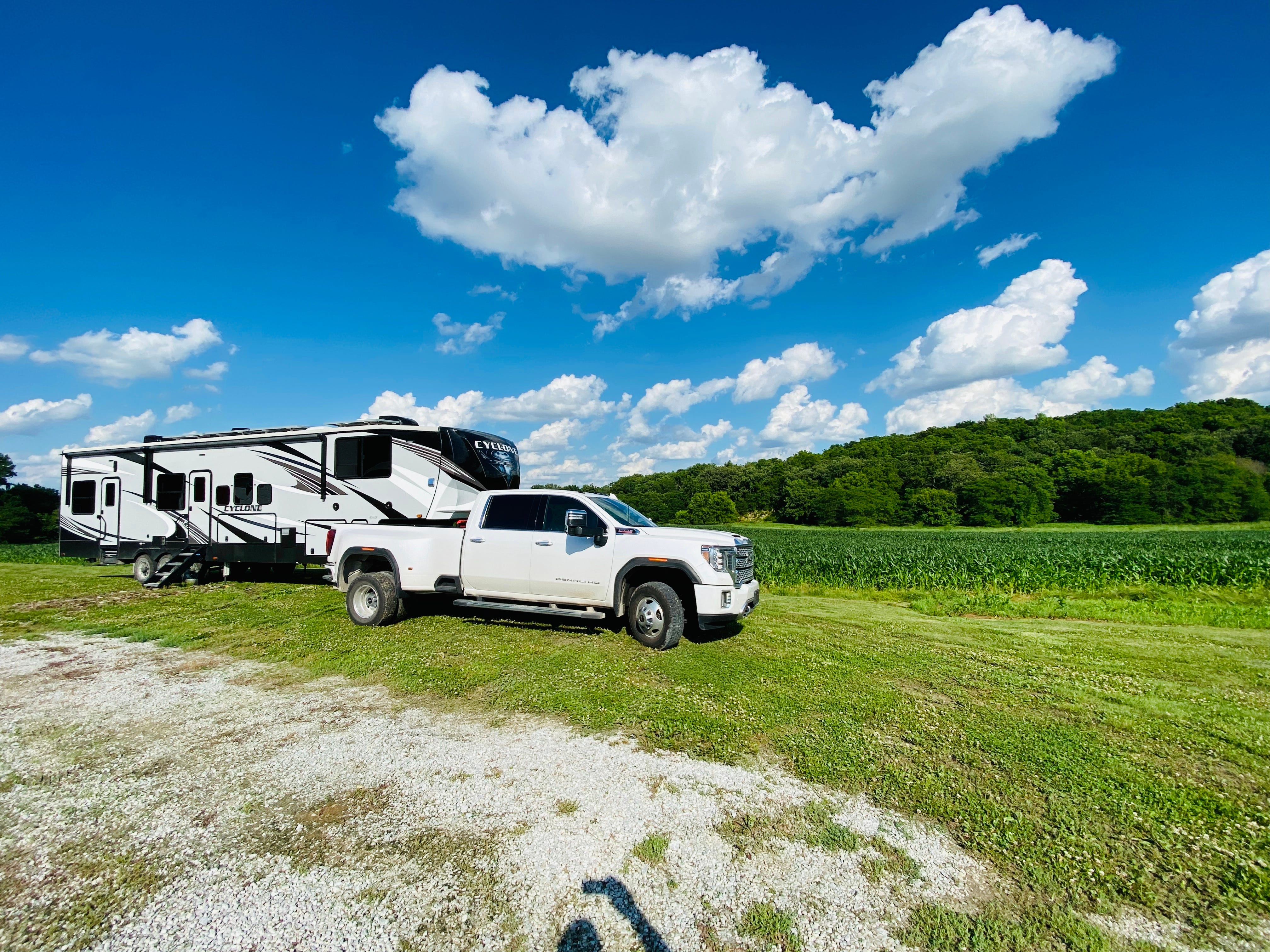
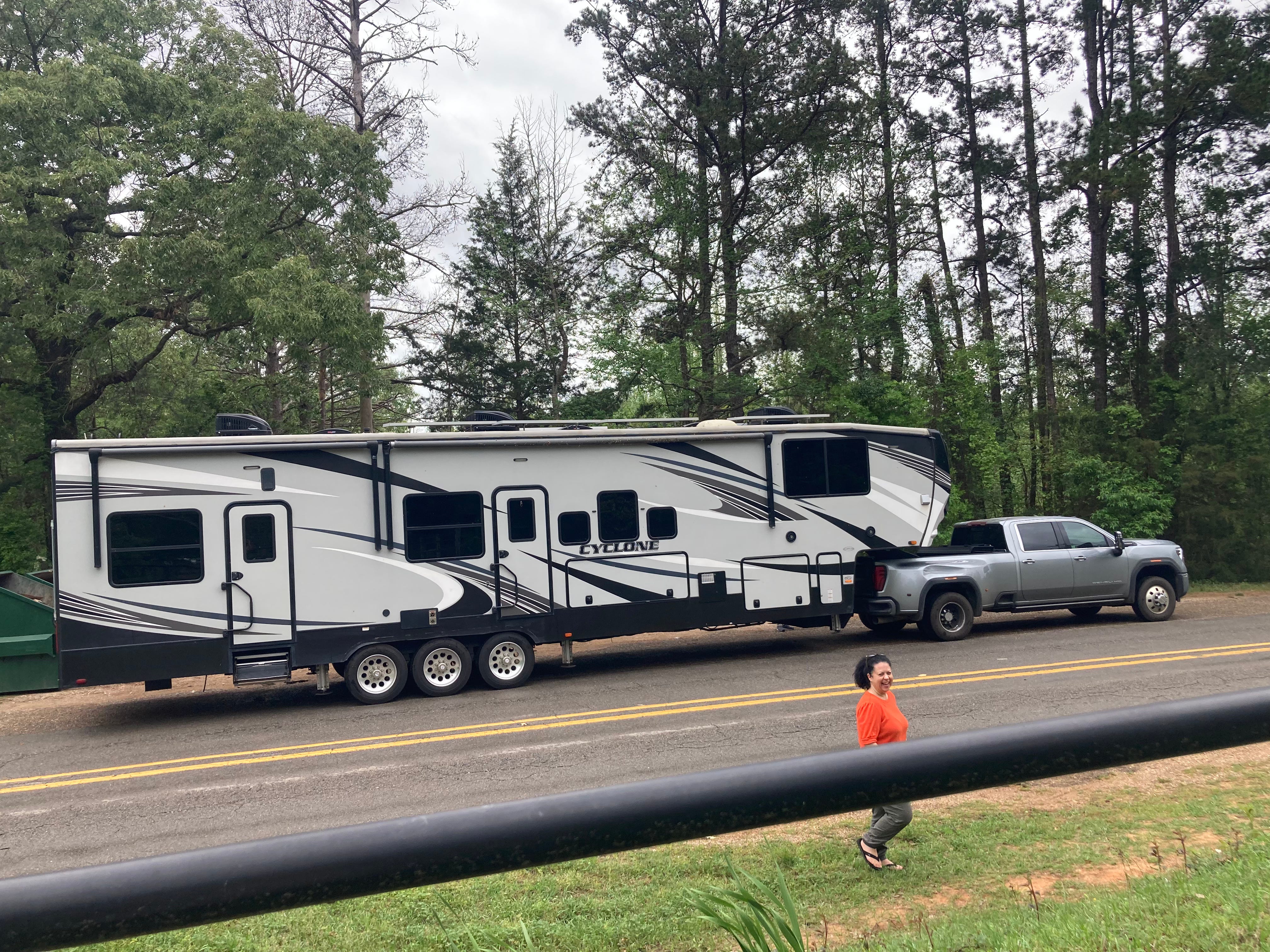
It’s a toy hauler - meaning, we are able to store our motorcycle inside the RV when traveling. This space is called the “garage” and also serves as Steve’s office during the week and a guest room when people come to visit us.
While the floor plan in our RV is what we wanted, we didn’t want it to look like an RV, so we’ve done a lot of renovations.


Q: How do you decide where you’re going next?
A: In the first year of living in our RV full time, I learned that I needed to plan our entire year in advance to ensure that we get to visit the places we want to see at the time of year we want to go there. All that planning takes quite a bit of time, but it’s such a relief to know that we have a plan and that all the necessary reservations have been made.
Understanding what our main priorities are for the year is probably the most important consideration for me when planning our itinerary.
For example, after moving around a lot in 2021, we decided that moving less often was a priority for 2022. I chose locations central to many places we might want to visit and RV parks where we could stay for 3-7 weeks at a time. This eliminated most State Campgrounds, which we love, but which also generally have a 14-day limit.
In 2023, we went back to moving around every couple of weeks, spending most of the year boondocking and in State Parks. That decision was based in large part on wanting to control our budget, which is one of the main considerations in the planning process. Some years we choose to spend more on campground reservations, and other years we decide to spend less.
Other concerns when deciding on a location are:
1. Will there be enough space for our 43-foot toy hauler and truck?
2. Will we be able to connect to the internet so we can work while we’re there?
I also do a lot of research to determine road conditions in and out of a spot, especially in remote areas. I rely heavily on Campendium, a user-reviewed website with information about thousands of campgrounds and RV parks.
Q: What is boondocking?
A: Most of the time, boondocking describes the experience of dispersed camping on public land. Dispersed camping refers to camping outside of a designated campground.


Camp spots are primitive, meaning there are no connections to running water, electricity, or sewer. The land is generally undeveloped with no bathrooms or outhouses, water pumps, or picnic tables. Many boondocking locations do not have paved roads.
While occasionally a permit is required, boondocking is usually free. There are no reservations or assigned camping spots. You simply show up and find a place to park.
Most boondocking locations are on BLM (Bureau of Land Management) land, which is public land that can be used for a variety of uses, including camping. In general, camping on BLM land involves parking in a space where it's obvious that someone else has camped before.
BLM land can be found across the United States, but the vast majority is in the west.
Q: How do you manage without water, sewer, or electric hook-ups?
A: Our 5th wheel has a 100 gallon fresh water tank plus several waste tanks. This will last us a week if we aren’t really trying, and 2 weeks if we make a concerted effort.
We keep a collapsable 100 gallon fresh water bladder in the truck, so when we run out of fresh water, we don’t have to drive the entire RV to a fresh water source. We also keep a portable waste tank in the bed of the truck for the same reason. When our waste tanks are full, Steve pumps the waste into the portable tank and drives it to a dump station.
Steve has also installed a renewable power system on our 5th wheel which includes solar panels and lithium-ion batteries. If we have several hours of sun every day, this system gives us all the power we need to live normally. If we have a couple of days of cloud cover, we can turn on a generator to power up the batteries.
Living in a rig that's so self-contained means we have the freedom to let other priorities, like budget and location, dictate our choices. Our travel decisions are dictated by where we want to stay more than where we have to stay.
Q: How do you connect to the internet?
A: Our primary internet source is Starlink, but we also have an unlimited data plan with AT&T. We use Starlink most of the time, but if we are parked in an area with a lot of tall trees, they can sometimes block the signal. In those cases, we rely on AT&T.
As you can imagine, these considerations are part of the planning process. If it looks like trees might be a problem, I make sure there is a good AT&T signal in the area before adding the location to our itinerary.
Q: Do you have a storage unit?
A: Not anymore! We maintained a storage unit for the first few years after selling our home. It wasn’t a large unit, but there were things we wanted to keep and couldn’t bring with us. Also, our daughter kept a lot of her things in there while she was in college. It was always our goal to get rid of the unit eventually, and it felt great when we finally made that happen. Our daughters are now the caretakers of the family keepsakes, and we’ve learned to live without everything else.
Q: What happens when your RV breaks down or needs repairs?
A: One word: Steve.
My husband has been able to fix every single thing that’s broken on our rig in the nearly 7 years we’ve been traveling. This includes minor inconveniences and major problems.


We would not be able to live this way if Steve wasn’t so incredibly capable of fixing all the things that break. Because everything breaks. Traveling is like taking your home through a 12-hour earthquake. Also, RVs are built to be lightweight and therefore not particularly durable. Not to mention the fact that quality control in the industry is basically nonexistent.
When we meet people who say, “We’ve always wanted to live in an RV!” the first thing we ask them is if one of them is mechanically inclined.
The alternative to fixing everything yourself is finding a dealership or repair shop that can do the work. Depending on where you are, this may be difficult to find. Also, RV dealerships are notorious for taking a ridiculously long time to complete repairs (we’re talking months) and are not known for quality workmanship.
When your RV is your home, handing it over to a dealership for an indefinite period of time is not a great option.
Q: How long does it take you to pack up and get on the road?
A: Packing up and getting on the road generally takes us 2 hours - we can do it faster if we need to, but on a normal moving day, that’s the right amount of time. Many RVers try to minimize the amount of packing and unpacking they do so they can get on the road faster.
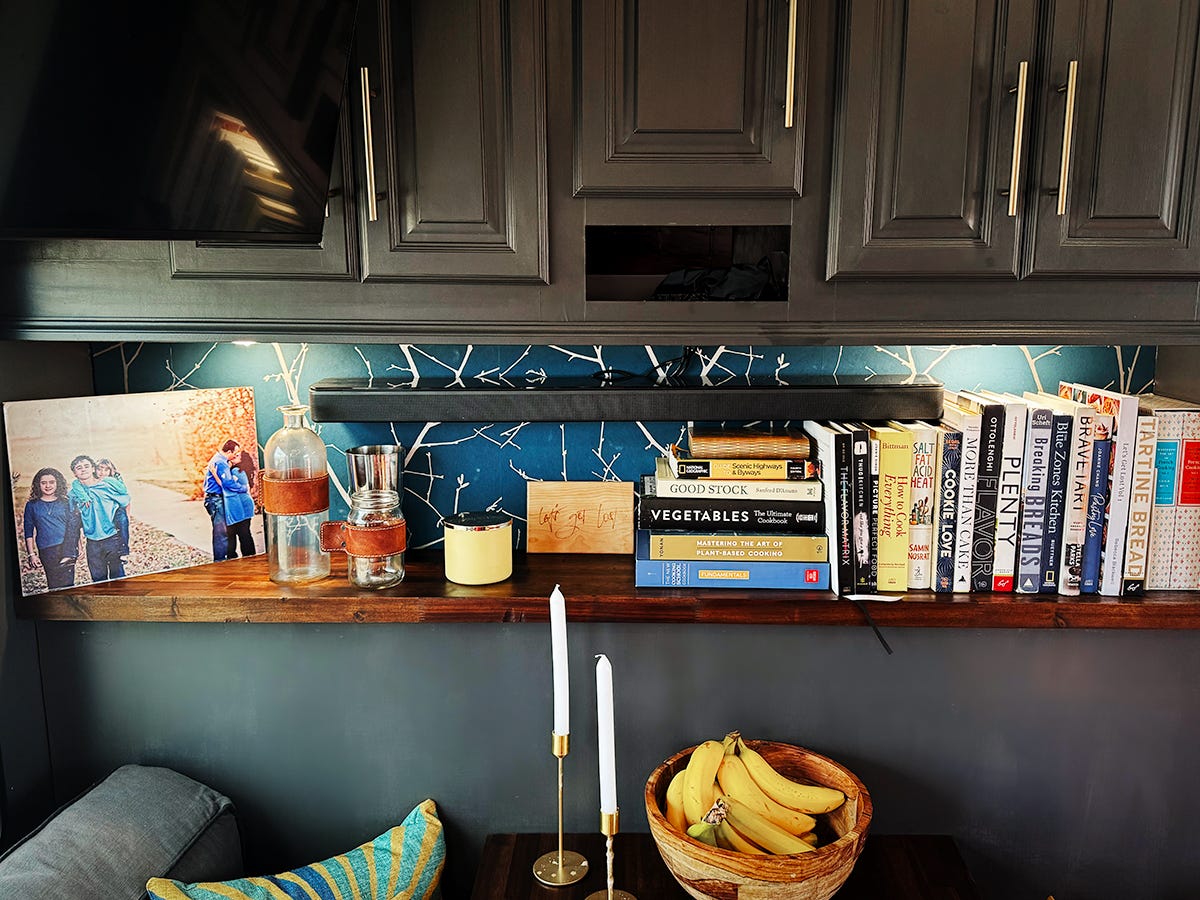
For us, we enjoy being fully settled and at home wherever we are. I love having books on my bookshelf, candles on the table, and pictures on the wall. We live here, and we both like being in a space that feels comfortable and homey.
Q: Do you think you’ll ever settle down and buy another house?
A: I honestly don’t know. I suppose at some point age will prevent us from living like nomads, but we are (hopefully) a long way away from that day. At the moment, we don’t have any plans to settle down in one place. But we both feel comfortable taking it year by year.
Road Food: Good food that travels well
Whether you’re heading across the country, across the world, or simply across town, this series of recipes is made for life on the move. They’re easy to make, easy to pack, and taste just as good hours later as they do fresh from the kitchen. Perfect for road trips, picnics, hikes, airplanes, potlucks, packed lunches, busy weeknights, and anywhere else you need to go.
This series of recipes is exclusively for members of The Lost Supper Club (paid subscribers).
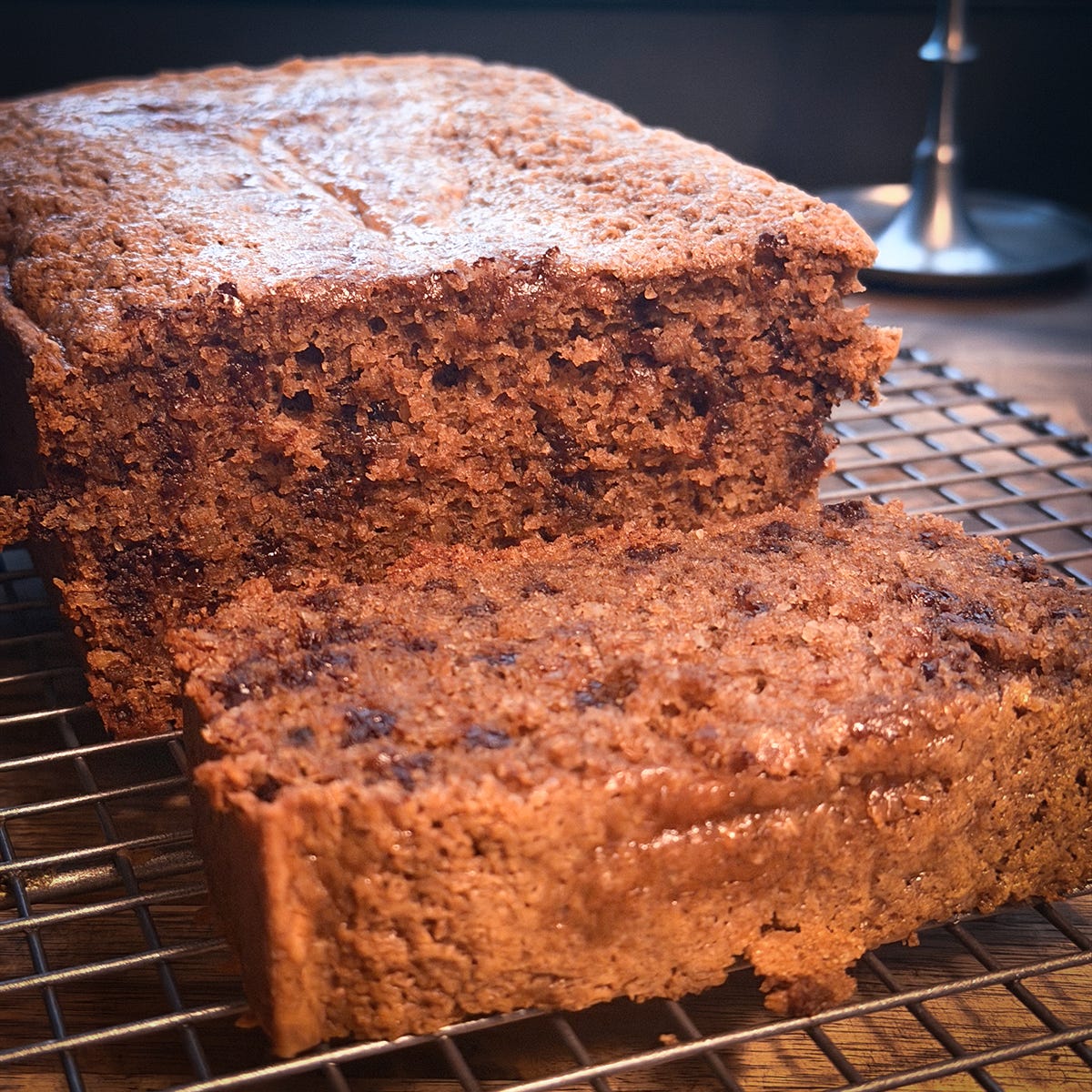
Walnut Chocolate Chip Spice Cake
Road food notes: Stays soft and fresh for 3-4 days • Individually wrapped slices travel well • No mixer required • Not too sweet • Soft and hearty crumb with nibbles of walnuts and chocolate in every bite
We had two solid days of rain last week, which is honestly one of my favorite things in the whole world. I love rainy days. They are all the excuse I need to get a pot of soup going and bake something sweet. And is there anything better than tucking into bed with a good book and the gentle patter of rain on the roof? Especially with a belly full of soup and cake?
I had started working on this recipe a few weeks earlier and decided the rainy weather was the perfect excuse to fine-tune its rough edges. I wanted a soft, tender cake with tiny pieces of walnuts scattered evenly throughout.
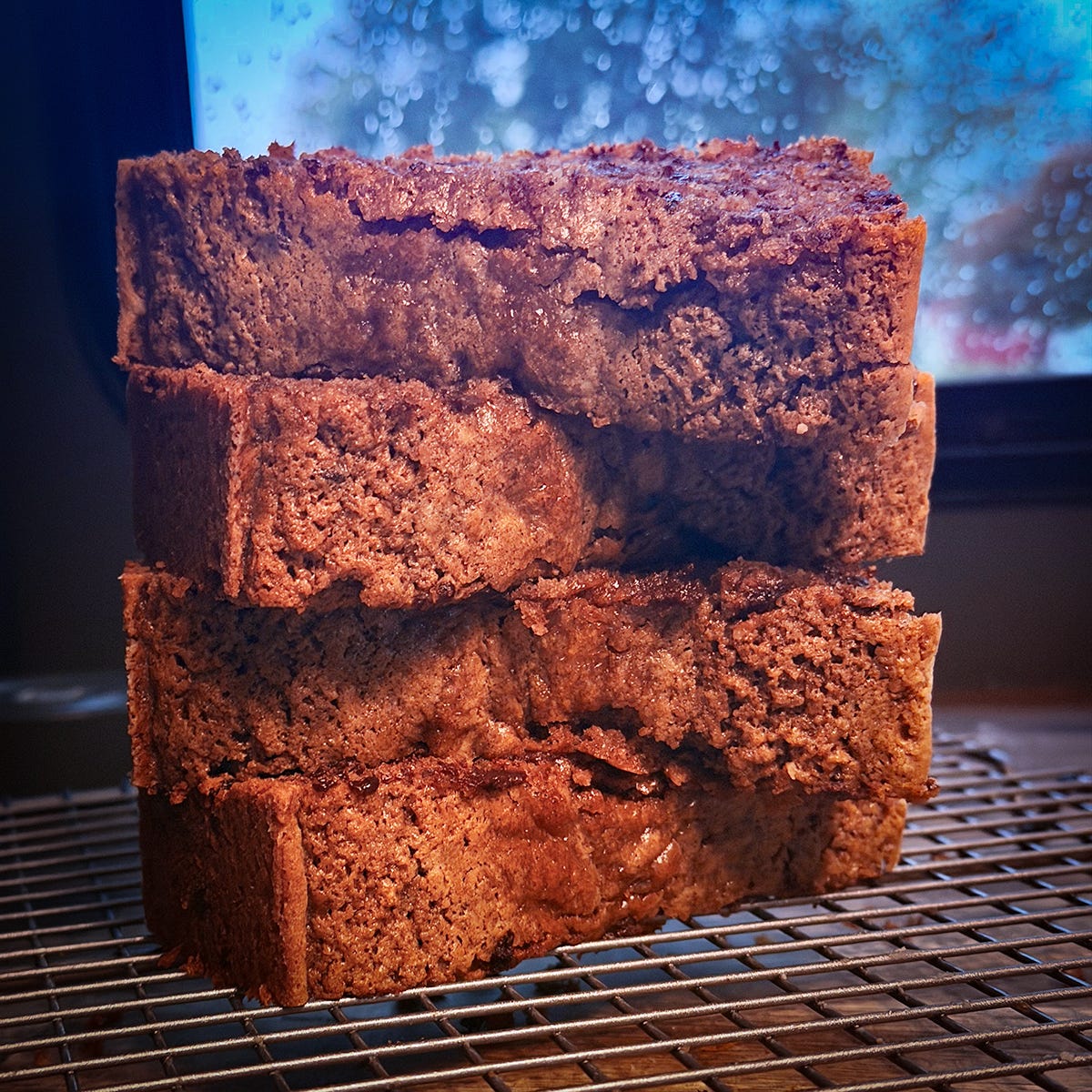
As a general rule, I am not a fan of large pieces of nuts in my baked goods. I’d rather keep my banana bread, brownies, and carrot cake nut-free, and if nuts are to be involved, I don’t want them to interfere with a soft crumb or creamy texture.
That said, I love nuts of all kinds. I’m just picky about using them in baked goods. So for this cake, I ground the walnuts in the food processor with a bit of sugar to help break them into small pieces without turning them into a paste.
The ground walnuts are scattered evenly throughout the loaf, their delicate little crunch adding some contrast to the soft cake.
After cutting the cake and wrapping the slices individually, I brought one to a friend who lifted it to her nose and took a deep breath. Mmmmm, it smells like fall, she said.
And that is what we want from any kind of spice cake, isn’t it? There is something about the smell of cinnamon, nutmeg, allspice, and cloves that announces the arrival of fall. Add to that the smell of butter, vanilla, walnuts, and chocolate, and you can practically hear the leaves crunching under your feet.
This week’s menu
Oven Braised Chicken Stew with Potatoes and Carrots
Browned chicken thighs, buttery Yukon Gold potatoes, and sweet carrots cook in a savory sauce with garlic, thyme, and a splash of white wine. This hearty chicken stew finishes in the oven, giving you tender chicken and rich flavor with mostly hands-off cooking after browning.
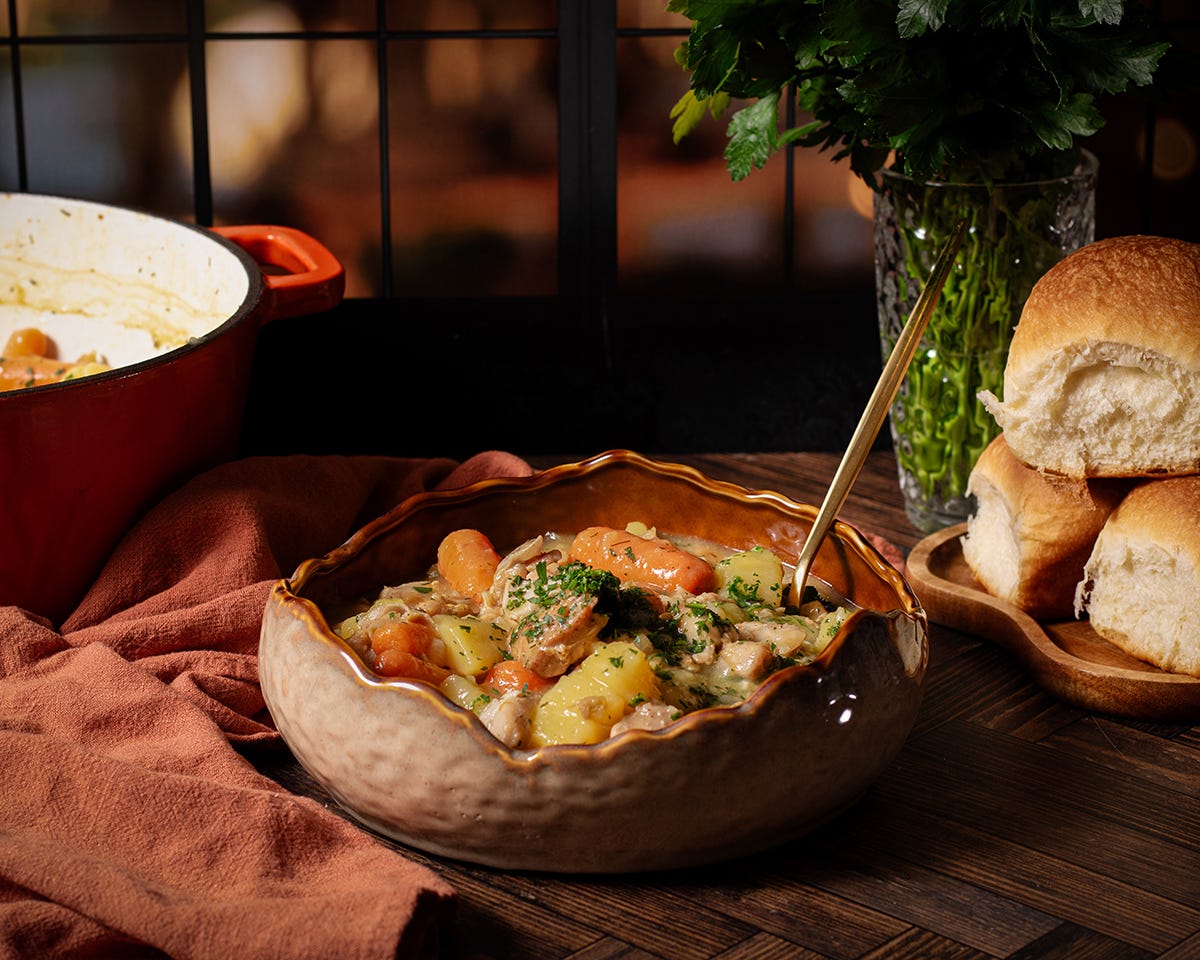
This recipe does not skimp on the chicken or the flavor. And the rich and creamy sauce does not even require the addition of cream.
Homemade Dinner Rolls
One of the best things about these rolls is that they can be adjusted to your schedule. Slow down the development of the dough by simply putting the dough in the refrigerator. Cold temperatures will not kill yeast - it will just slow down its activity.
So, for example, you can mix the dough in the morning and then put it in the refrigerator to let it rise slowly all day. Or mix up the dough in the evening and let it rise slowly in the refrigerator overnight.

If you want dough to rise quickly, put it in a warm environment, such as inside your oven with the pilot light on, or in a bread proofer. I have this Broad & Taylor Bread Proofer and I use it often in the winter when the inside of the RV is cold enough to slow the process down to a crawl. It also collapses into a flat, thin rectangle that’s easy to store, another bonus when you live in a small space.
Regardless, these rolls are soft, pillowy, and so very buttery. I’ve been making them for nearly 30 years and they are still one of our favorite things.
Yellow Cake with Chocolate Frosting
This cake has that buttery, soft, moist texture that we all want from a classic yellow cake. Unlike many yellow cake recipes that can bake up heavy or dry, this recipe uses one simple technique that makes a huge difference: the egg whites are whipped separately before being folded into the batter right before baking.
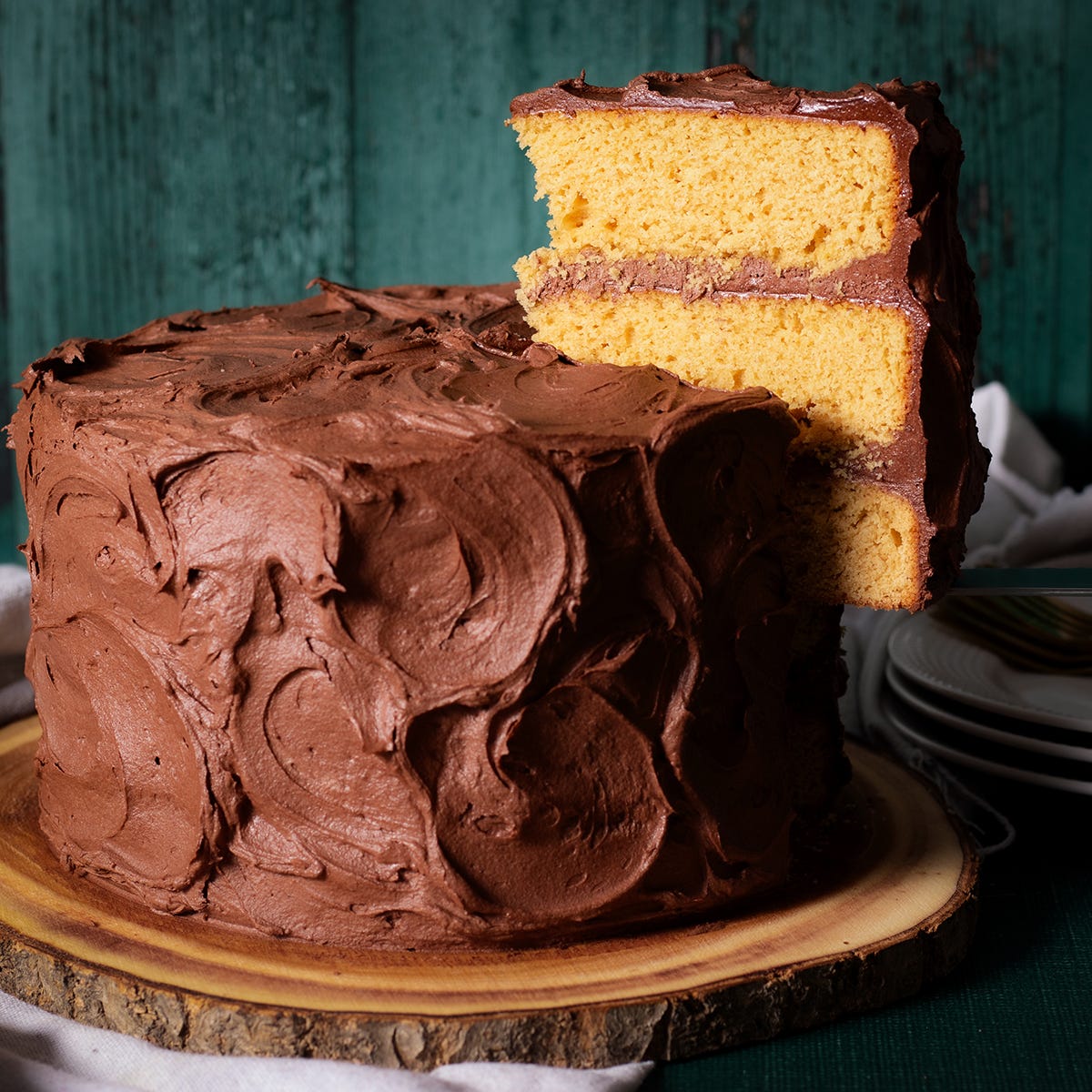
This simple method creates a light and tender texture that’s rich without being heavy, and a soft, buttery crumb that melts in your mouth. It also helps prevent the cake layers from sinking in the middle while they bake. It’s a technique I’ve relied on for years, not just in this recipe, but also in Homemade Vanilla Cake and its more glamorous cousin, Champagne Cake.

To all my paid subscribers: This newsletter would not exist without your generous support. The CookStack Collective classes and the new Road Food series are exclusively available to you. They are two ways for me to say thank you.
Join me this week for the October CookStack Collective Class with Nicki Sizemore!
Join Nicki Sizemore and me on Friday, October 16, when she’ll show us how to make two seasonal staples — a whipped ricotta dip and a grain-free pumpkin apple cake — alongside simple practices for cooking with more intention and joy.

Access to The CookStack Collective is exclusively for members of The Lost Supper Club (paid subscribers). This will be the fourth class in this 12-class series. If you’ve missed the previous classes, here’s where you’ll find the replays and the calendar of upcoming classes.
Join us live on October 16th, at 1:00pm Eastern Time.
❤️ Did you know that if you hit the heart or recycle symbol at the top or bottom of this post, it makes it easier for other people to find this newsletter?