


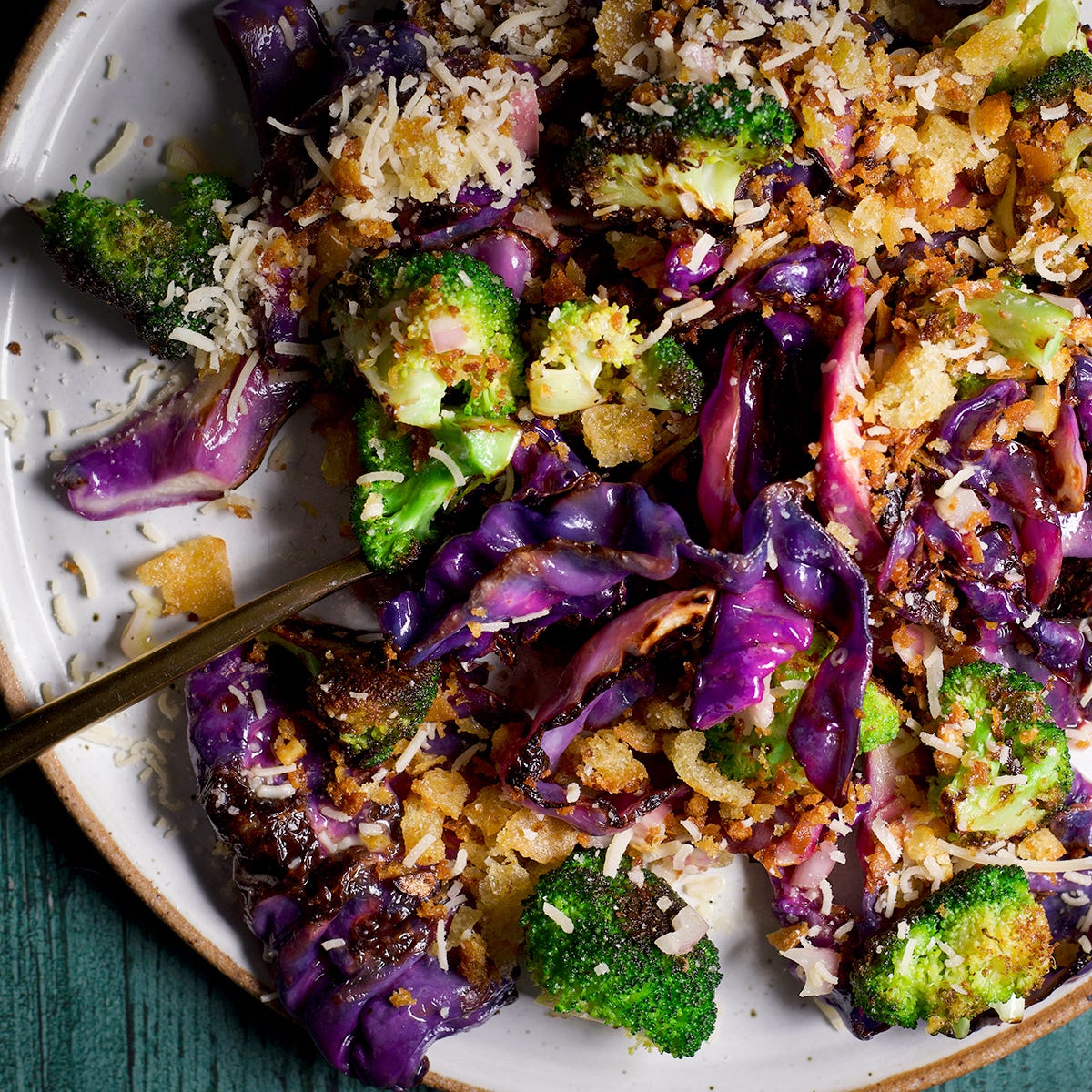
The concept for this salad is so simple and adaptable to any kind of veggies you like, with or without the cabbage. And, it’s an excellent way to use up leftover bread. Here’s what we’ve got going on here:
Cabbage and veggies cooked at very high heat until charred (you could also do this on a Blackstone griddle or a grill).
Drizzle the veggies with a basic vinaigrette.
Top with crispy garlic bread crumbs and some parmesan cheese.
The result is a very satisfying salad with so much flavor and plenty of crunch. It’s delicious served with almost anything but is also hearty enough to serve all on its own. How much you make is up to you, but be sure to make enough bread crumbs to include a generous proportion of crispy crumbs to veggies.

Crunchy Cabbage Salad
- Basic vinaigrette (see recipe below)
- Several slices or chunks of stale bread
- Vegetable oil or canola oil and/or butter
- Several cloves of garlic
- A head of red cabbage - the size of the cabbage depends on how many people you want to serve
- Any other veggies you want to add (I used broccoli florets for the salad you see here)
- Shredded parmesan cheese
- Step 1Add the stale bread to a food processor and pulse until it’s chopped into crumbs. Some pieces will be slightly larger - the size of pea or a bean - that’s ok.
- Step 2Add a couple tablespoons of oil and a tablespoon of butter (the butter is optional) to a skillet. Peel the garlic cloves, chop them into small pieces and add them to the skillet.
- Step 3Set the skillet over medium heat. When the butter has melted, add the bread crumbs and toss them around until they are coated with oil and butter. If the bread crumbs look dry, add a bit more oil. Cook, stirring frequently, until the breadcrumbs are a deep golden brown and crispy. Scrape them into a bowl and set aside. Rinse out the skillet.
- Step 4Cut the cabbage from top to bottom, so you have steaks that are about 1-inch thick.
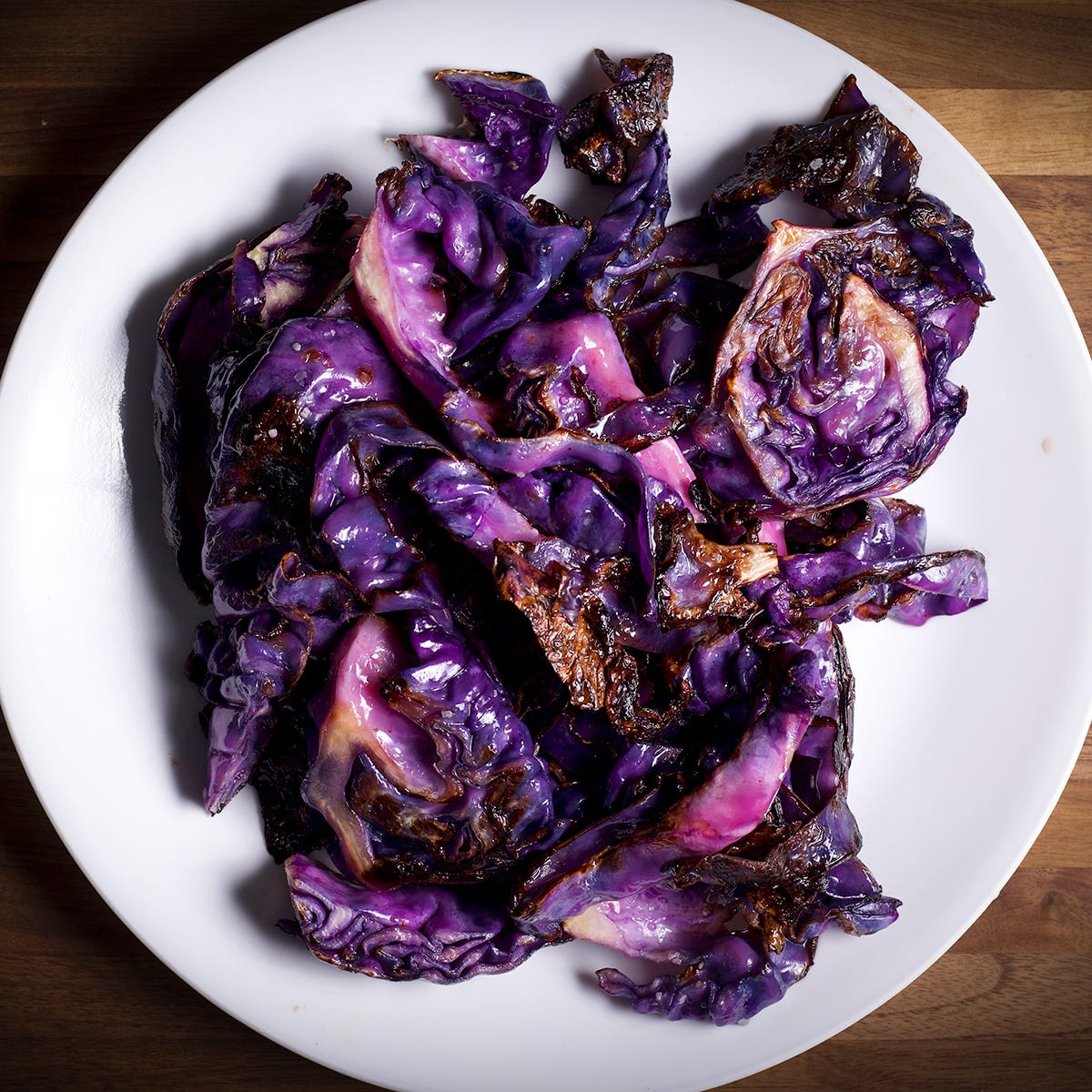
- Step 5Add another tablespoon or two of oil to the skillet and set it over high heat. When the oil is very hot and shimmery, add the cabbage steaks to the pan. Let the cabbage cook, undisturbed, until the bottom of the steaks are charred. Flip them over and cook until charred on the other side. They will fall apart a bit when you flip them over - this is not a problem. Just spread the pieces of cabbage out in the pan so you get plenty of charred spots. Sprinkle the cabbage with salt after turning it over.
- Step 6Remove the cabbage from the pan. Add a bit more oil to the skillet and repeat with whatever other vegetables you’re using: cut the vegetables into bite size pieces and cook over high heat until charred in several places.
- Step 7To build the salads: Pile the cabbage and charred veggies on a plate and drizzle with vinaigrette. Top with a generous amount of bread crumbs and some shredded parmesan cheese.
Super Easy Basic Vinaigrette
Making a basic vinaigrette takes about 5 minutes, allows you to make only as much as you need, and is a kind of blank slate for incorporating whatever flavors you like.
At it’s most basic a vinaigrette is nothing more than oil and vinegar (or citrus juice). Oil and vinegar do not like to combine and honestly, you don’t have to combine them at all. You could simply drizzle your salad with a bit of oil followed by some vinegar. Or stir oil and vinegar together in a bowl with a pinch of salt and pepper, drizzle that over your salad and be done with it.
However, if you don’t do something to emulsify the vinegar and oil (force them to combine), you’ll end up with oil clinging to the top of your salad and all the vinegar pooling at the bottom of your plate or bowl. Also, the greens in your salad will wilt faster.
In contrast, an emulsified vinaigrette clings to salad greens, providing an actual “dressing” that flavors each and every bite. It also keeps the greens crisp and fresh tasting for longer.
So, taking a moment to fully emulsify vinegar or lemon juice and oil is essential to a salad that’s crisp, fresh tasting, and full of whatever flavor you’re hoping to get from the vinaigrette.
The easiest way to emulsify a vinaigrette is to include a surfactant - an ingredient that attracts both water (vinegar) and oil.
There are three surfactants that work well in vinaigrette: mustard, mayonnaise, and honey. I like to use a little bit of all three. Here’s the basic ratio:
2 parts oil to 1 part vinegar or lemon juice
1 teaspoon each of mustard, honey, and mayonnaise
Additional flavoring: chopped shallots, salt and pepper + anything else you want to add. At the moment, I’m obsessed with adding some crushed roasted almonds that I’ve pulverized in the food processor. OMG, it’s so good! Here’s a list of more flavoring ideas.
How to make it: Add the vinegar or lemon juice to a bowl and add the mustard, honey, mayonnaise, shallots (if using), salt and pepper, and any other flavorings you’re adding. Use a fork to whisk it all together then pour in the oil while continuing to whisk. In mere seconds, the dressing will come together in a delicious, creamy sauce that will cling to your salad and flavor each and every bite.

Welcome to Let’s Get Lost! I’m Rebecca, a recipe developer, food photographer, passionate people watcher, and chaser of new experiences. You might know me from my recipe websites, Of Batter and Dough and A Little and A Lot.
My husband and I are nomads without a home base but with many modes of transportation, namely an RV, a motorcycle, and a sailboat. I write recipes and stories for curious people who believe experiences are more important than things and who want more adventure. Find out more.
Gorgeous salad!